Friday, August 06, 2010

Masquerade; Within My Heart


Excerpt from Masquerade

By Nancy Moser

1886, New York City: Charlotte Gleason, a rich English heiress travels to America to marry the even wealthier Conrad Tremaine. But she has second thoughts, and persuades her maid, Dora, to take her place. What begins as the whim of a spoiled rich girl wanting adventure becomes a test of survival. As for Dora, she lives a fairy tale complete with gowns, jewels, and lavish mansions--yet is tormented by guilt and the presence of another love that will not die. Will the switch work? It's the chance of a lifetime.

See a book trailer for Masquerade at: http://www.youtube.com/watch?v=dS4vP-lZrIc

Read my historical fiction blog at: http://footnotesfromhistory.blogspot.com/2010/07/masquerade.html

Check out excerpts for all my books at: http://www.nancymoser.com/

Be my friend on Facebook: Nancy Moser Facebook Page

Read my monthly devotional at: http://www.christianfictiononlinemagazine.com/best_devotion.html

Ë›

Chapter One

Dornby Manor
Wiltshire, England
Early autumn 1886

"I've told you, Father, I won't marry him."

Thomas Gleason held a matchstick to the bowl of his pipe and puffed repeatedly, luring the tobacco to ignite. "It's a good match, daughter. Everyone has heard of the Tremaines, even here in England."

Heard of their money, perhaps . . .

Lottie remembered the whispered rumors about the Tremaines. She knew her parents hated gossip—or pretended to for propriety's sake—but now was not the time for her to be timid. "Some say the Tremaines are nouveau riche. The elder Mr. Tremaine is but one generation away from those who peddled their goods on the streets of New York City."

Her father pointed his pipe at her. "Perhaps. But Tremaine's Dry Goods has grown to encompass a five-story building, taking up an entire city block."

Mother shook her head and said beneath her breath, "A glorified shopkeeper."

Father shot her a glance.

Mother nodded to the maid, Dora, to pour the tea. "We are the ones doing the Tremaines the favor. You are Sir Thomas Gleason," she said. "The Gleasons have ties to Richard the Second. Our name is listed in Debrett's."

A puff of smoke billowed in front of Father's face. "Now, now, Hester. By seeking a goodly match for our daughter, we're not negating our own roots. It's a blessing the Tremaines have shown interest in our Charlotte, especially since they've never met any of us. And considering . . . "

Lottie interrupted. "You act as if meeting me might cause them to change their minds. I may not be a ravishing beauty, Father, but I've been complimented many times regarding my appearance."

"No, no," her father said. "Don't take offense. You're a lovely girl. I was merely pointing out the odd circumstances of . . . our situation."

Hester coughed and put her ever-present handkerchief to her mouth.

Lottie tried unsuccessfully to squelch her annoyance at her mother's cough. Hack, hack, hack. Perhaps if Mother spent more time outside, walking the grounds of their Wiltshire estate, her health would improve. But Mother prided herself on indoor pursuits, namely her needlepoint chair cushions. Best in the county, she bragged. Lottie didn't care for such nonsense. To go to so much work only to have someone sit upon it was absurd.

As was this conversation.

Lottie set her teacup down, rose from her chair, and moved to the windows that overlooked the front lawn. "I don't see why we have to talk about this now." Or ever. "It's my birthday and my friends will be arriving for my party soon and . . . " She turned to her mother directly. "Speaking of my party, why aren't you bustling about? A dozen of my friends will arrive in just a few hours, yet if I didn't know better, I'd think the party was next Tuesday rather than today."

The handkerchief rose once again. "You said you didn't want an extravagant soiree, dear, just a light repast with cakes and sweets for your friends. Mrs. Movery is quite busy with the food preparations, I'm sure." She glanced at Dora. "In fact, toward that end . . . Dora, why don't you go see how things are coming along in the kitchen."

Dora said, "Yes, ma'am," and left them.

Lottie wished she would have stayed. Dora was her lady's maid and her best friend in the entire world. But lately, her parents had started asking Dora to do other tasks, even helping out in the kitchen, which was unthinkable. Lottie had noticed a few of the housemaids and parlour-maids were no longer in service with the family, but that didn't mean Dora should suffer. "I don't understand why Dora is suddenly being asked to expand her duties. She's my maid. I assure you I keep her very busy."

"I'm sure you do, daughter," her father said. "But . . . well . . . "

Mother continued the thought. "With the preparations for your party this afternoon . . . "

Something wasn't being said. Lottie wished her parents would tell her what was going on. She had a good mind. She could practically recite the novels of Jane Austen and the Bronte sisters by heart. Didn't that prove she had an intellect worth utilizing? Sometimes Lottie thought she would scream from lack of purpose. To sit in the house all day, reading or doing needlework, waiting for someone of consequence to call was silly. She would happily trade two women of means for one person who could offer amusement or witty conversation. Odd how those attributes were sorely lacking in polite society, among people who were far too polite to be of interest.

But now, looking out upon the front drive and the vista of the green that carpeted the house to the road, she abandoned her worries for the anticipation of seeing carriage after carriage arriving for her party. Guests laden with presents—for her. Perhaps purpose was overrated. In all her nineteen years she'd found it quite acceptable—pleasant, really—to let the world beyond their country home dip and spin without her. What did she care of labor acts or problems in Ireland or whether Queen Victoria became Empress of Burma? Where in the world was Burma?

Lottie preferred experiencing life through novels where the characters were always enjoying a lovely ball or romp through the countryside that would lead them to their one true love. Her copies of Pride & Prejudice, Sense & Sensibility, and Little Women were threadbare. Lottie especially enjoyed stories about sisters—perhaps because she had none. Conversely, she did not enjoy the books of Elizabeth Gaskell or Charles Dickens with the same zeal, finding their stories too driven by social inequities. She didn't want to read about the world's problems. She wanted romance, diversion, passion, and a happy ending—in her books and in real life . . .

Copyright 2010: Nancy Moser

Bethany House Publishers

By it at Christian Book or your favorite bookstore


* * *

Within My Heart

by

Tamera Alexander

"Tamera Alexander paints scenery with the written word, and makes characters, stories, and insights linger long after the book is read."
–Cindy Woodsmall, New York Times bestselling author

"Break out the tissue box for this one! Book three in the Timber Ridge Reflections series is an entertaining romance that will warm your heart and stir your faith. Without being preachy, Alexander guides readers to the foot of the Cross. The reminder that life holds no guarantee on happiness, but we must continue to keep our hearts open and trust God will resonate with readers."

-- Romantic Times, 4 star review

About the book:

Sometimes the greatest step of faith is taken neck-deep in fear.

Determined to fulfill her late husband's dream, Rachel Boyd struggles to keep her ranch afloat with the help of her two young sons. But some days it feels as though her every effort is sabotaged. When faced with a loss she cannot afford, she's forced to trust Rand Brookston, the one man in Timber Ridge she wishes to avoid. And with good reason. He's a physician, just like her father, which tells her everything she needs to know about him. Or so she thinks . . .

Dr. Rand Brookston ventured west with the dream of bringing modern medicine to the wilds of the Colorado Rockies, but the townspeople have been slow to trust him. Just as slow in coming is Rand's dream to build the town a proper clinic. When a patient's life is threatened, Rand makes a choice—one that sends ripples through the town of Timber Ridge. And through Rachel Boyd's stubborn heart.

Prologue

Dusk, hours following the Battle of Nashville

December 17, 1864

Half hidden beneath the bare-limbed canopy of a dogwood tree, the gravedigger kept a reverent distance, patiently waiting for the last whispered prayers to be uttered and for the final mourner to take her leave. Only then did he step into the fading light, a worn spool of string clutched tight in his gnarled hand. Not much time left. It would be dark soon. And the last grave still needed tending before the pewter skies let loose their winter white.

The distant squeak of wagon wheels and the clomp of horses' hooves faded into the night, leaving only the faint chirrup of crickets to companion the silence. Jessup Collum lifted the lid of the oblong pine box and with painstaking care, his arthritic fingers numb from the cold and marred with time and age, he tied a trailing length of string around the soldier's right wrist. Mindful not to tie the string overtight, he looped the other end through a tiny bell.

He stared for a moment at the soldier's face—the fallen Confederate a mere boy judging from his features—then he glanced around at the freshly covered graves. Deep in his bones he knew what he was doing was right, even if a bit out of the ordinary. There was no malice in his actions, and no sin, most certainly. Nothing that would bring serious offense. Though folks would surely think him a touch senile, if they saw. If they knew . . .

So many ways for a man to die, yet only one was needed for the earth to cradle a body back from whence all life had come. Jessup turned that thought over in his mind as he'd done countless times before, not indifferent to the shadows stealing across the graveyard as the December sun hastened its retreat. Nightfall brought bitter cold, but not a breath of wind stirred, and each snowflake lofted downward from heaven, unhindered in its journey. He worked hurriedly to cover the last grave, mindful of the trailing string.

After the last shovel of dirt, he straightened, slowly, his crooked spine bearing the brunt of forty-two years of tending this hallowed ground—and of the last few hours of burying the bloodied remnants the Federal Army had abandoned following their assault. If the once-valiant Tennessee Army had been crippled in the battle at Franklin two weeks ago, then the past two days of fighting had delivered a mortal wound.

Jessup lit a torch and stared over row after row of mounded earth, the light casting a burnished glow around him. Too many and too young were those who lay here, going before their time. Before their lives had been lived out. He thought again of the young woman earlier who'd been last to take her leave. Dark-haired with skin pale and smooth as cream, she'd knelt for the longest time at the grave on the far end, one he'd taken care in covering not two hours earlier, as he'd done the one at his feet just now.

She'd huddled close by that grave, weeping, arms drawn around herself, looking as if she'd wanted to lay herself down and mark an end to her own life, what little she had left after losing the man buried there—"a decorated lieutenant from the Tennessee regiment, and my only brother," she'd whispered through tears.

The wound on the lieutenant's neck had told Jessup how the man had died, and the sutures and bloodstained bandages told him how hard some doctor had fought to save him. Shame how fast these soldiers were buried. No proper funeral. No time for one—not with the Federal Army bearing down hard, void of mercy, bent on conquering what little was left.

He tugged the worn collar of his coat closer about his neck and begged the Almighty, again, to intervene, to put an end to this war. Surely it couldn't go on much longer.

A heavy mist crept over the rise from the creek, shrouding the stone markers. The fog seemed to deepen the pungent aroma of upturned earth, and a beguiling trace of honeysuckle clung to the cool night air, despite the wild vine not being in bloom. Jessup took a deeper whiff and could almost taste the sweet summer nectar. A smile pushed up his whiskered cheeks. Maybe folks were right. Maybe he was a touch senile after all. These days recent memories skittered off about as quickly as he reached for them, while others that should have been long gathering dust inched closer as the years stretched on. He sat down against an ancient poplar, borrowing its strength.

Still no wind, and the snow had ceased falling. He imagined the boy's face again, able to see it clearly in his mind's eye as he stared at the bell, willing it to move. Even the slightest bit.

He put his head back, resting his eyes, only for a moment. But the moments lengthened and gathered and pulled taut, coaxing him along on a gentle wave, absent of the throb in his lower back and the ache across his swollen knuckles. He was a boy again, running through fields knee-high with summer grass, the sun hot on his face, sweat from a humid Tennessee afternoon beading on his forehead and matting his hair to his head. Someone called to him in the distance. A voice so sweet . . .

A lifetime had passed since he'd heard that voice. Mother . . .

He ran, youthful legs pumping hard, trying to reach her, wanting to see her again. But the faster he ran, the farther away her voice seemed to—

Jessup awakened with a start, his breath coming in sharp staggers. An uncanny sense of presence crowded the darkness around him, and he realized the torch had gone out. He sat straighter, head cocked to one side, and listened, straining to hear his mother's voice again.

But her voice was gone.

He wiped the telling moisture from his cheeks and rose, the joints cracking in his knees. In all his days, he couldn't recall so still a night. So loud a hush over the graves. With a sinking feeling, he looked down at the grave of the young boy. It was late now. Too late.

He prayed the boy was at peace, wherever he was. Same for the decorated lieutenant down the way. He didn't know much about the afterlife—not like folks expected him to—but he reckoned if God was as kind as he believed Him to be that there was some sort of special welcome going on right now for those men who'd laid down their lives in this terrible—

The distant tinkling of a bell brought Jessup upright.

A skitter shimmied up his spine. The air trapped viselike in his lungs. Praying he wasn't still dreaming, he searched the darkness at the end of the row where the woman had knelt earlier, and his skin turned to gooseflesh. If this was what some folks felt when they visited this place late at night, he knew now why they never ventured back.

He also knew why he would never leave.

Tamera Alexander is the bestselling novelist of Rekindled, Revealed, Remembered, From A Distance, and The Inheritance, Women of Faith's first historical novel. Her deeply drawn characters, thought-provoking plots, and poignant prose resonate with readers and have earned her multiple industry awards, among them the 2008 and 2009 Christy and the 2007 and 2010 RITA. After living in Colorado for seventeen years, Tamera has returned to her Southern roots. She and her husband now make their home in Franklin, Tennessee where they enjoy life with Tamera's father, Doug, and also with their two college-age children who live nearby. And don't forget Jack, their precious—and precocious—silky terrier.

Visit her Web site at www.tameraalexander.com
Visit her Blog at www.tameraalexander.blogspot.com
Enter to win a copy of Beyond This Moment at:
http://www.tameraalexander.com/contest.html

Within My Heart is available at bookstores everywhere, on www.bethanyhouse.com, www.amazon.com, www.christianbook.com, and at your local Christian bookstore.

Copyright © 2010 by Tamera Alexander

ISBN 978-0-7642-0391-6

Bethany House Publishers
All rights reserved. Do not reproduce without permission.

Wednesday, August 04, 2010

Missing Mabel; The Weight of Shadows


Missing Mabel: A Curl Up and Dye Mystery


By Nancy Mehl


Hilde Higgins knows hair, and she knows the hair on her client doesn't match that of the person originally identified as Mabel Winnemaker. How can she make the funeral director acknowledge the mix-up when they think she is creating a distraction to cover for stealing for stealing Mabel's diamond ring? Now her reputation and career are on the line. The only way to salvage her future is to find the missing Mabel. Can an old boyfriend be of help, or will he just add to the complications in her tangled life?


Excerpt:


I glanced at my watch. I was supposed to meet my mother at one o'clock. Just enough time to do Mabel's hair and get to the restaurant. Lunch with Mother. Not something I looked forward to. My mother still couldn't understand why I'd left college to go to beauty school and ended up working on "dead people's hair, for crying out loud." Mom is a successful neurosurgeon who is absolutely horrified by my career choice. I'd tried once to explain to her how it happened, but her dazed look told me that she was either taking a quick, open-eyed nap, or she was thinking about the next skull she planned to crack open. At least we were both concentrating on the same end of the body.


No matter how I tried to express myself when it came to my present job, she couldn't understand it. To be honest, I wasn't exactly certain myself how it happened. Fresh out of beauty school and accepted into one of the top salons in Wichita, I was in a position to make good money while doing something I thought I would really enjoy. I knew my mother had pulled some strings to get me hired by Monsieur Maximilian, who owned Maximilian's Salon de L'Élégance. Although it's the premier salon in the city, I was L'Miserable. Most of my clients were rich, older women who wanted to look like Julia Roberts. When they stared into a mirror and saw crow's feet, double chins, and loose skin, somehow it was always my fault. My hairstyles were supposed to perform miracles, it seemed. Unfortunately, God didn't see fit to fill my combs and brushes with miracle-working power.


My life changed one afternoon about a year ago when Monsieur Max grabbed the back of my coat and screeched, "Ah, ma petite chérie, you must grab your combs and go right now!"


Assuming I was fired, I felt an overwhelming sense of relief. However, that was followed by a rush of terror when I understood that I was being sent to a local funeral home to fix the hair of a recently departed patron. The family insisted that their dear mother's hair be styled by the same salon that had been taking care of her for years. Surprisingly, no one else wanted to go.


Feeling that my career, such as it was, was hanging by a thread, I drove to The Sweet Slumberland Funeral Home, shaking like a leaf. I was scared stiff (no pun intended) as I was led down the hall to my client. But once we were alone, something happened to me. I felt a real


peace in that room, and before long, Gertrude's hair was beautifully coiffed.


A couple of days later, I slipped quietly into the back of the church where her funeral was being held. Because she and her family were well known in the community, the church was packed and no one noticed me. After the service, I followed the procession of mourners who filed past her


open casket. Two women in front of me stopped to stare at their late friend.


"Oh my goodness," one whispered to the other. "She looks lovely. She always had the most


beautiful hair."


"Yes she did," the other acknowledged. "Her daughter was worried that her mother wouldn't look right. Gertie was very fastidious, you know. But I understand Carol was so comforted when she saw her mother at the funeral home, she broke down and cried with relief. I'm glad she'll be able to remember Gertrude this way."


Anyone seeing me would have thought Gertrude Maitland and I were close friends. Maybe the tears I wept weren't from a relationship with the elderly woman while she was alive, but we still had a bond. She had needed me to help her say good-bye. As I stood over her casket, I realized that I'd found something I wanted to do. I could use my skills with clients who wouldn't be voicing silly complaints, while I brought comfort to grieving families. I'd accidentally found my calling. I hurried back to the salon and quit my job that very afternoon. After listening to a stream of French phrases I'm pretty sure were dancing on the edge of profanity, I said good-bye to Monsieur Max, who was actually raised in Boise, Idaho, and set off on my new venture.


Within two weeks I had work. After a couple of jobs, the word spread quickly throughout the mortuary community. Even homes with their own cosmetologists called me. Applying makeup to the faces of the deceased was one thing. Fixing their hair was quite another. It took a level of skill most mortuary employees didn't have. One thing that helped me tremendously was that I always asked for a picture of my client so I could style their hair the same way they'd worn it when they were alive. I still remembered my great-aunt Edna's service. Her long hair, which was always worn in a bun, had been cut and tightly curled. She didn't look at all like herself. My grandmother was devastated.


"I don't know who that is," she'd declared at the viewing, "but that is certainly not my sister!"


I was determined that would never happen at one of my funerals.


Do not reproduce without permission.


Nancy Mehl is the author of "Simple Secrets," book one in The Harmony Series - Mennonite romantic suspense mixed with mystery. "Missing Mabel" is book one in her Curl Up and Dye mystery series. Book two, "Blown Away," will be released in the fall of 2010.


Her Web site is: http://www.nancymehl.com/ and her blog is located at: www.nancymehl.blogspot.com.
Her books can be ordered on Amazon.com , Barnes and Noble , Christianbook.com - or


can be found in local bookstores.


* * *


The Weight of Shadows


By Alison Strobel


The Weight of Shadows is, "moving," "engrossing, "complex," and "impossible to put down." After a difficult childhood, Kim finds everything she needs in Rick---including a way to pay for her sins. A gripping, gritty novel, The Weight of Shadows explores how the choices we make and the risks we take for those we love can touch the lives of others forever.


Is it truly a birthday party when the guests don't even know it's
your birthday? Kim pondered the question as she slipped on the
slacks she'd borrowed from her roommate Corrie. Certainly it was
an improvement over eating a store-bought cupcake alone in front
of reruns. She'd done that more times than she cared to remember.


Corrie's voice rang out over the stereo, welcoming whoever had
arrived and bringing Kim back to the present. She bit her lip, de-
bating whether or not to go out yet. These weren't her friends, she
wasn't good at small talk, and with only one guest there was no
way for her to disappear into the crowd or avoid interacting. Three
strikes. She'd better wait.


A pair of black flats, their toes and heels repaired with a marker,
were the finishing piece to her ensemble. She gave her red blouse a
tug at the bottom and examined herself in the mirror, happy with
what she saw. It was possible she wouldn't talk to anyone all night,
but at least she looked nice. In fact, part of her hoped no one would
talk to her - she'd met a few of Corrie's friends before, and they
were all out of her league. The thought of trying to hold a conver-
sation with any of them resurrected the butterflies. She frowned at
her reflection as the familiar self-doubt crept in. The less she said
tonight, the better.


Kim hated battling the voice of inadequacy that resurfaced
whenever she met new people. She reminded herself of the same
things she told her Club girls and gave her head a shake to dislodge
the negative thoughts. Your roots may form you, but they do not define
you. You are not less of a person because you lack the things most people
have. Your worth as a person is not determined by what you have, but
by who you are. When she talked to the girls, she was referencing
money, social standing, academic success, the perfect body - the
things teen girls usually stressed over. When she gave herself the
pep talk, though, she was thinking of family.


Six people had arrived, an equal mix of men and women who
had the same casual sophistication as Corrie, though two of the
women had a sort of polished hippie look that Kim envied, know-
ing she lacked the fashion sense to be like them. Her coordinating
abilities ended with slacks and blouses.


Corrie propped open the front door and returned to her conver-
sation. Kim walked to the snack table and began to load a plate with
some veggies and dip. She really wanted the chocolate chip cookies
Corrie had baked the night before, but she wanted to make a good
impression, and these folks looked like veggie people.


The next wave of guests entered, and instantly the party felt
more like a party. More talking, louder calls of "Hello!" across the
room, and, to Kim's great relief, less sophisticated dress. The last
one in shut the door behind himself and handed his scuffed leather
jacket to Corrie as he greeted her. Kim couldn't peel her eyes away
from him. He doesn't seem to belong with these people any more than I
do. Who is he?


The guest who had entered with Scuffed Leather Jacket intro-
duced him to Corrie. Kim was too far away and the room too noisy
for her to hear any of what they were saying, but Corrie, ever the
gracious hostess, made the universal mi casa es su casa arm-sweep
with a bright smile before carting the coats to her bedroom.


He stood with his hands half-jammed into his pockets and
looked around the room. When his gaze neared Kim she ducked
her head, though what she really wanted was to look him in the eye,
smile and welcome him, and commiserate. When he appeared at her
side, she almost couldn't breathe.


"The snack table is my favorite place to hide at a party too," he
said. She couldn't tell if he was sympathizing or making fun of her.


But his face, when she glanced over at him, was open and honest-
looking. There was no twinkle of teasing in his green eyes nor the
tug of a smirk at his lips. She laughed faintly and searched in vain
for something clever to say.


"My name is Rick, by the way."


"I'm Kim. Nice to meet you."


"You too. How do you know, um . . ."


"Corrie?"


"Yeah, Corrie."


"She's my roommate."


"Oh!" His face brightened. "Wow, this is your place?"


She slid her eyes back to her plate. "No. I wish. I just rent a room
from her."


"Oh, that's cool." He leaned in a little closer. "It's a nice place,
but not my style, you know? A little too . . ." He waved the hand that
wasn't holding a snack plate. "Calculated. Like those model homes
that are so decorated it's like walking into a design magazine."


"I've never thought about it, but you're right." She swirled
a carrot stick in a puddle of dip. "It's not really my style, either, but
I'll take it over just having a room any day."


They crunched on their respective vegetables in silence for a few
minutes before Kim got up the courage to speak again. "So who did
you come with?"


Rick pointed to the couch with a celery stick. "Guy I work with.


Adam. I think he knows Corrie from college or something like that.


Life has kinda sucked lately, so he invited me to cheer me up."


"That's a shame. I hope it works."


"It already has."


Kim felt her cheeks heat. She smothered the smile that stretched
across her face with a long sip from her soda.


http://www.alisonstrobel.com/Buy the Weight of Shadows at Amazon, ChristianBook, or your favorite bookstoreCopyright Alison Strobel 2010

Tuesday, July 27, 2010

Driftwood Lane; The Sister Bride


Driftwood Lane
(A Nantucket Love Story, Thomas Nelson)


By Denise Hunter


"A heart-warming romance . . . The perfect beach read!" --Kristin Billerbeck, best-selling author of What a Girl Wants


Chapter One


Meridith Ward surveyed the mess cluttering Delmonico's kitchen and shuddered. The kitchen staff scurried in quick, jerky movements, but then, it was lunch hour, and a hundred St. Louis business people had to get fed and back to their jobs.


The owner, Angelo Bellini, burst through the swinging door, nearly slamming into Meridith's back. "Please . . . we were not expecting you," he said over the din of clattering pans and voices shouting orders.


"That's kind of the point, Mr. Bellini." Meridith opened her notebook and continued the inspection.


The owner discreetly removed raw chicken breasts from the sink, setting them in a nearby skillet. He did not wash his hands.


Meridith made another note on the list of infringements.


"Meridith . . ." His accent caressed her name. He flashed his dimple.
She shot him a look.


"Ms. Ward," he continued, "we have had an unusually difficult morning. My cook, he called in sick, my prep boy did not even show up, and I have our host cutting vegetables." He gestured wildly. "He does not even know what he is doing. Such a day!"


Meridith strolled through the kitchen, still writing. The cook staff wove around her as though their moves had been choreographed. Despite the disorder, the savory smells of garlic and roasted chicken filled the air.


"I cannot even tell you!" Mr. Bellini continued. "Please, we can do this another day. I would be happy to show you around myself tomorrow."


Meridith's phone vibrated in her pocket. "Excuse me," she shouted over the whir of a machine roaring to life.


She retreated to a quieter corner of the kitchen and opened her phone, so eager to escape Mr. Bellini, she didn't check the caller ID. "Meridith Ward."


A moment's silence made her wonder if she'd missed the reply.


"Hello? This is Meridith."


"Meridith Ward?" A male voice, unfamiliar.


"Yes, may I help you?"


"Do you know T. J. Ward? Terrance James Ward of Nantucket?"


It was a name she hadn't heard in years. A name she tried not to think about, usually with success. The name sucked the moisture from her mouth, set her heart racing, stole the reply from her tongue.


"Hello?"


It was just a phone call. She cleared her throat. "Yes, you have the right Meridith. How may I help you?"


"My name is Edward Thomas. I need a moment of your time, but it sounds like I've caught you in the middle of something."


Her excuse to avoid this altogether. She could hang up and never accept another call from Edward Thomas. But problems didn't resolve when you ignored them, they got worse. She scanned the kitchen. Case in point.


She drew a shaky breath and pulled herself to her full five-foot-three inches. "Now is fine, Mr. Thomas. Go ahead."


"I'm an attorney on the island of Nantucket. First of all—and I'm so sorry to relay this over the phone—we've been trying to locate you for two weeks. I'm afraid that your—that T. J. Ward and his wife, Eva, were involved in a boating accident. They didn't, that is . . . I'm afraid neither survived, Meridith."


Her racing heart skipped a beat, like the wheels of a tire hitting a speed bump, then continued on its frantic way. They were gone? Both of them, just like that?
She waited for the numbness to dissipate and the wave of pain to wash over her. But it didn't come.


She should feel something. Something other than this cold void. Was there something wrong with her? Maybe she needed time to process. Two weeks ago, he'd said. The funerals were over by now. It was all over, and there was nothing for her to do.


"Meridith?"


She watched Mr. Bellini continuing his belated cleanup. She remembered her relief at the call and realized now that she'd chosen the worse of two evils.


"Thank you for notifying me, Mr. Thomas. I appreciate your taking the time to locate me, but I really must return to work."


"Wait, Meridith, I—I'm afraid there's more. I handled T. J. and Eva's legal matters."
Of course, there was the matter of his estate. This was a lot to digest.


"I'm sure you're aware that T. J. and Eva ran a bed-and-breakfast—I'm not certain how long it's been since you've seen them."


"Quite a while." Years, actually.


Mr. Bellini was yelling at the prep guy, making imaginary chops with the side of his hand.
"I surmised as much. Nonetheless, T. J. and Eva were very clear in their provisions, should the unthinkable happen. They wanted Summer Place to go to you. Furthermore, they've named you as guardian of the children."


Summer Place . . . the children?An inappropriate bubble of laughter caught in her throat.
"I know this must come as a shock. I'm not unaware that—"


"There must be some mistake." Her hand worked its way to her throat. The children? Three of them. How old were they now?


What did it matter? This was a mistake. A clerical error.


"I spoke with T. J. and Eva myself. The will was drawn up several years ago, but I've spoken with them regularly since then. We were friends as well."


Then they should've left the children to you! Meridith pressed her fingertips to her forehead. Impossible. What did she know about children? Especially these children?


"I don't know what to say, Mr. Thomas." A gross understatement.


"This is a lot to take in all at once, I understand. But we're in a bit of a pickle here. An elderly neighbor has been staying at Summer Place, caring for the children. As I said, it's taken two weeks to locate your number. Mrs. Hubbard is in poor health, and there's no one else. Your presence is needed rather immediately."


"My job . . ."


"Might I suggest a short leave of absence?"


There had to be somebody. Somebody else. Eva had a brother, didn't she?


As if reading her mind, Mr. Thomas continued. "We've been unable to reach Eva's brother. He's traveling and, last the children heard, he was in Georgia, but that's all we know. You should know that he was named as a possible guardian in the event that you declined the task. But again, the need for help is immediate."


She played with her engagement ring. She couldn't leave Stephen, couldn't leave her job, could she? The thought of leaving St. Louis, leaving all that was familiar, even for a short time, brought a tidal wave of anxiety she hadn't felt since college. She drew a deep breath, then another.


"The fact is, the children are in dire need of your assistance, Meridith. Since Mrs. Hubbard fell ill, members of the church have been taking shifts. Very kind of them, of course, but it can't go on. If you don't come quickly, I'm afraid I'll have no choice but to alert Child Protective Services. I'd hate to see the children go to foster care, even temporarily. And there's no assurance they'd be placed together."


Foster care! Meridith imagined suited men coming into their home, carrying them off. She imagined the littlest, a boy, screaming for his mommy.


From somewhere deep inside compassion swelled, followed quickly by a surge of protectiveness she didn't know she was capable of. She had no doubt there were decent foster homes. But the thought of the children being separated seemed cruel when they'd just lost their parents.
She had to do something. It was her responsibility, even if she'd never met them, because T. J. and Eva had named her the children's guardian. And because, like it or not, she was their sister.


Do not reproduce without permission


* * *


The Sister Wife, book one: Brides of Gabriel


by Diane Noble


"Diane Noble not only explores the early days of the Mormon church; she also probes deeply into the human heart... the pages turn faster and faster…right up to the breathless conclusion and the promise of more drama to come." (Liz Curtis Higgs, best-selling author of Thorn in My Heart )


"Diane Noble is at her best in The Sister Wife. I found myself transported by the richness of her


words, the authenticity of her research and the depth of her spirit. Well done!" (Jane


Kirkpatrick, award-winning author of An Absence So Great )


Mary Rose loved her husband, but could she do what the Prophet asked?


Set in the earliest days of a new nineteenth-century sect known as the Saints, The Sister Wife is a riveting account of two women drawn into religious practices they don't understand, bound by devotion to Prophet Joseph Smith. When Mary Rose marries Gabriel, neither of them could foresee how quickly the community would turn to the practice of plural marriage. Devastated when Gabe is faced with an order from the Prophet to marry her best friend, Bronwyn, Mary Rose searches her heart for the faith she learned as a child, a different faith -- and God -- than the one being proclaimed by the Prophet. Even as her journey takes her into a dark and heartbreaking place, a still small voice beckons her toward the Truth she thought she'd lost forever. Will she find the One who can give her the strength to see her through? Can she forgive the ultimate betrayal by her husband and best friend? Will she find the courage to do what is required of her?


Enter the riveting world of the Brides of Gabriel.


Mary Rose is a young Mormon convert of aristocratic English blood.


Bronwyn is a beautiful young widow with a baby.


And Enid, Gabe's first love,
holds a secret she's never revealed ...


June 28, 1842


Mary Rose refused to let the sting at the back of her throat turn to tears. Instead, she drew in a deep breath and reached over her swollen stomach to pluck weeds from between the rows of cabbage seedlings.


Distant wedding bells tolled, calling the Saints to the meetinghouse for the ceremony sealing seven brides to less than half as many grooms.


As her knees sank into the loamy soil she gave little thought to the peau de soie gown she


wore, one of the few stylish frocks that had survived the voyage and wagon journey to Nauvoo, and the only one with an Empire waist that could accommodate the child growing beneath her heart.


She plunged her hands into the wet soil and breathed in its soft fragrance, thinking of fertility, life, and growth. She would miss her garden; it had been a source of wonder since Bronwyn had helped her turn the first spade of soil. Throughout the winter and early spring they had talked about their plantings: radishes, beans, winter squash, corn, and herbs for cooking; and then they had convinced Gabe and Griffin of their need for an arbor, and amid laughter and loving conversation, all had worked together to build it. Neighbors had supplied them with healthy cuttings of grapevines and berries. With a sense of wonder, she had watched her early garden thrive and felt an almost motherly pride at the tender new growth.


Little more than a year earlier, back in England, the thought had never entered her pampered head that she might take such pleasure in the sun's warmth on her shoulders, or the burial of a seemingly dry and dead seed that days later pushed its tiny sprout-self through the soil, reaching for the same sunlight that gladdened her heart.


From the henhouse, several yards beyond the garden, the low clucks of hens and higher pitched peeps of the fresh-hatched chicks brought another wave of sorrow. How could she leave this place she'd grown to love in such a short time? How could she leave the man she loved with every ounce of her being? Especially now that she carried his child?


The gentle breeze cooled her warm cheeks, and she drew in a deep breath, concentrating on the rhythmic music of the farm: the breeze rattling the oak leaves by the creek out back, the low murmurs of hens and chicks, the nickering of a newborn colt, and the answering neigh of his mother in the pasture.


Her eyes filled, and her heart ached with longing as if she'd already hitched the carriage and driven off.


She tried not to think about Gabe's decision as betrayal, but it crept into her mind anyway. Along with words from an Elizabeth Barrett Browning poem . . . It was thy love proved false and frail. She pictured her love's face, imagined him with Bronwyn, and for all her strength and determination to hold back her tears, this time she could not. She whispered the words to the last stanza of the poem. The words, as if driven deep with an ice pick, stabbed too close to the marrow of her bones.


Ah, Sweet, be free to praise and go!


For if my face is turned too pale,


It was thine oath that first did fail,


It was thy love proved false and frail,


And why, since these be changed enow,


Should I change less than thou.


She drew in a shuddering breath to regain control. She needed every ounce of strength to get through this day. She plunged her hands into the earth, drawing comfort from the cool soil and willing away the pain in her heart.


Gabe had taken his time, first with his toiletries, then with the new trousers and gleaming white shirt Mary Rose had laundered just the day before. As he prepared himself to look his Sunday best, she'd fled to the comfort of her garden. Now she heard his footsteps and pulled the brim of her fancy bonnet lower to shade her face from the unblinking sun. And to avoid her husband's eyes.


"Why are you out here? It's almost time to go," he said.


She kept her back to him. "You shaved twice."


He laughed. "I often do that. Why should this be any different?"


"You know why."


"I thought you'd decided to come with me," he said. "I know it's difficult for you, but you gave me your word." If he'd yelled or cursed, it would have hurt less. But as always, he was too much of a gentleman, a loving, kind man, to resort to such behavior.


"I changed my mind," she said as he helped her stand. She gave him a small half-smile.


"A woman is entitled." In truth, she had dressed for the occasion, planning to make an appearance so none would be the wiser when she hitched the horse to the family buggy and rode off in the night. But when he preened in the mirror and then pulled out his straight razor a second time, she knew that no matter what she and Bronwyn discussed, Gabe had plans of his own.


He drew her into his arms. "Mary Rose," he whispered, his breath tickling her ear. "It isn't right or proper that you stay away, today of all days. It is your duty to welcome Bronwyn into our family, standing by my side. I would not have done this without your consent."


She slipped out of his embrace and, pushing back her bonnet, looked up at him in rage. But when he swept his hair back in that way he had, raking it with his fingers, her heart overflowed with the same love she'd had for him since they'd said their own vows.


"My consent?" She almost laughed. "As if, after Brigham told me my options, I had any say in it. You do not have my consent, regardless of what the elders—and you—might tell others."


Do Not Reproduce without permission.
For more information about Diane and her writings visit www.dianenoble.com, connect with her on Facebook at www.facebook.com/dianenoblebooks, or send her a tweet at http://twitter.com/dianenoble. Purchase The Sister Wife at http://www.amazon.com/Sister-Wife-Brides-Gabriel-Book/dp/0061962228/ref=sr_1_1?ie=UTF8&s=books&qid=1270919022&sr=1-1

Friday, July 16, 2010

The Crimson Cipher; Refuge on Crescent Hill


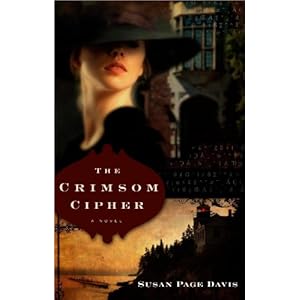
The Crimson Cipher


By Susan Page Davis


Emma Shuster is recruited as a Navy cryptographer in 1915, to help expose enemies she didn't know America had. Lt. John Patterson introduces her to the Signal Corps after her father's brutal murder. She finds new strength in her faith as she strives to outwit her adversary, known only as "Kobold"—German for "goblin." When the young man who built her father's secret cipher machine is also brought to Washington, Emma is annoyed. But with Clark's arrival comes added danger.


Susan Page Davis is the author of 30 novels in the historical romance, romantic suspense, mystery, and romance genres. She's an ACFW Book of the Year Winner, and a two-time


Inspirational Readers' Choice Award Winner. Visit her Web site at http://www.susanpagedavis.com/


This book can be purchased at Amazon: http://www.amazon.com/
Barnes & Noble: http://www.bn.com/, or Christian Book Distributors: http://www.christianbook.com/.


Chapter one


Wednesday, January 27, 1915


Emma Shuster hurried across campus against the cold wind coming off Casco Bay. Six inches of powdery snow draped the college's brick buildings in glittery icing, and Emma's heart sang.
A man in a blue wool coat with epaulets on the shoulders and a peaked hat of the same hue approached the Searles Science Building from the opposite direction. Navy, Emma concluded—a fine-looking officer. She looked away before he could catch her eye.


He reached the door of the brick building just as she did. "Hello." He smiled brightly and opened the door for her.

"Thank you." As she entered, she tucked the large envelope she carried under her arm, pulled off her knit gloves, and headed for the stairs.

"Excuse me," the man said.


She paused and turned toward him. "Yes?"


He unbuttoned his overcoat, revealing a uniform beneath. "I wonder if you could direct me to Professor Shuster's office."


Emma relaxed and smiled. "I'm just on my way up to see him, sir. If you'd like to follow me, I'll take you there." Her father was a Navy veteran. She wondered what the young man wanted with him.


He walked beside her to the third floor landing. The handsome stranger towered nearly a foot over her.


She supposed she should break the silence if she didn't wish to be thought rude. "Several of the mathematics and science professors have their offices up here."


"Indeed. I expect the climb keeps them fit." The young man smiled. "I'm John Patterson."


"And you're with the Navy, Mr. Patterson?"


"Yes. Lieutenant, actually."


They'd reached the door of her father's office. Emma gave a quick knock and turned the knob.


"Father, I've brought someone to—" She broke off with a gasp. Her father's slender form lay sprawled on the floor. Blood seeped onto the varnished oak boards and the papers strewn near him. "Father!"


She dropped her envelope and knelt beside him. Bending close, she touched his arm. The awful stillness of his body sent chills through her. A dry, fierce ache filled her throat. Pushing his shoulder slightly, she tried to speak again, but a sob wrenched her chest.


Patterson knelt on the other side and put a hand to the fallen man's throat. After a moment, he reached across and gently touched Emma's sleeve. "I'm sorry, ma'am."


"No, no! We need to call a doctor."


"I'm afraid there's nothing a doctor could do for him."


She wept then­­—great, hot tears splashing down her cheeks.


"Miss Shuster. Come and sit down."


Emma raised her hand to her mouth, staring at the blood. She struggled to stand, but her knees buckled, and she grabbed the lieutenant's outstretched arm.


He caught her as she wilted. "There, now. Let me help you."


He turned a wooden chair to face the door, holding her upright with his steel-like right arm.


"Sit down, miss."


Emma sank onto the chair and held her hands over her face.


"Can I get you anything?"


"No," she managed. "Thank you. Just...please, see to Father. Make certain..."


He left her side, and she shivered. She wanted to look over her shoulder and see what Patterson did—to assure herself that she'd been mistaken and only imagined the ghastly scene.


She didn't move.


The lieutenant came back, his jaw tense. "I'm sorry, Miss Shuster. I'm afraid it's too late."
A new sob worked its way up her throat. He touched her shoulder, and the weight of his hand through her coat was oddly comforting.


"We ought to call the police. Is there a telephone box nearby?"


"There's a phone in the front office of this building, to the right of where we came in."


"I'll run down there and call for an officer. Will you be all right?"


She studied his face, wondering how he expected her to answer that.


"I...don't think so."


"No, of course not." He squeezed her shoulder lightly. "I'm so sorry. Would there be people in


the other offices on this level?"


"Yes, probably." She bit her lip. "Professor Fairleigh is across the hall, and Dr. Shaw is next door."


"All right, I'll be right back."


He was at the door before she forced out a word. "Lieutenant—"


"Yes, ma'am?"


She wanted to say, "Take me with you," but she didn't. Even if she couldn't make herself look at Father again, she couldn't leave him unattended. She shook her head and clenched her hands in her lap.


"I promise I won't be long."


She nodded.


His knocking on another door echoed in the hallway. The murmur of voices was followed by quick, heavy footsteps. Short, sturdy Dr. Shaw appeared in the doorway. His gaze pinned Emma to her chair, then shot past her.


He gasped. "Good heavens! Whatever happened?"


"We don't know, sir," Patterson said. "If you would be so good as to go down and phone the police..."


"Of course."


Dr. Shaw's thick shoes clumped on the oak stairs. Far away a bell chimed, and the hubbub of students exiting their classes wafted up the stairwell.


Emma raised her chin and blinked back tears. Patterson stood ramrod straight, just inside the door, as though on guard duty.


"Thank you," she said. Thank you for sending Dr. Shaw, and for not going yourself—but she couldn't say that.


"You're welcome. And if there's anything else..."


"If you are a man of faith, Lieutenant, I'd appreciate any prayers you could spare this morning."


"You have them already. Miss Shuster, I'll help you in any way I can."


Her heart ached, and a fresh stream of tears bathed her face. Patterson reached into a pocket and produced a spotless cotton handkerchief, folded and ironed into a perfect square. He placed it in her hand and pressed her fingers around it. For a moment, the warmth of his hand spread to hers.


"I don't know what I'd have done if I'd walked in alone." She unfolded the fabric and wiped her cheeks.


Copyright 2010, Susan Page Davis


* * *


"It's history, mystery, and treasure hunt wrapped up in one suspenseful adventure! You'll want to keep the lights on while you read Dobson's plot-driven story. She so skillfully sets the scene in this memory-haunting house that you'll hear the creaks and footsteps." --Fiction Editor,

Christian Book Distributors


Refuge on Crescent Hill


By Melanie Dobson

Jobless, homeless, and broke, Camden Bristow decides to visit the grandmother she hasn't seen in years. But when Camden arrives in Etherton, Ohio, she discovers that her grandmother has passed away, leaving her the 150-year-old mansion on Crescent Hill. When Camden finds evidence that she may not be the mansion's only occupant, memories of Grandma Rosalie's bedtime stories about secret passageways and runaway slaves fuel her imagination. As she works to uncover the past and present mysteries harbored in her home, Camden uncovers deep family secrets within the mansion's walls that could change her life—and the entire town—forever.

Chapter 2


The Bristow family mansion watched over Crescent Hill like a battered Union soldier. Rain had pounded the brick walls for almost two hundred years, and a hailstorm had crumbled one of the four chimneys a decade ago. In spite of the weather that threatened to topple her, the house held strong, braving Ohio's volatile weather like she'd braved the War.
And like a good Yank, she harbored secrets deep inside her walls.

Jake Paxton wasn't interested in the architecture or the history of the old house, but he was very interested in its secrets . . . or at least Edward was.

Now that Rosalie had kicked the bucket—and the crowds of visitors were gone—he promised his grandfather that he would search the mansion, top to bottom, in a day or two. He needed to be sure none of the visitors were still hanging around town.

Edward made him swear he wouldn't get caught this time, like it was his fault that the detective caught him selling Mrs. Rolling's silver on Craig's List. How was he supposed to know her ugly platter was worth ten thousand bucks? Or that it was stolen? Or that Mrs. Rolling would try to buy another platter, only to discover that the replacement platter she purchased was in fact her family's heirloom?

Buck Houston had given him the stupid platter to pay off a gambling debt, and Jake had done what anyone else would do—sold it. If he'd known it was worth something, he would've asked a whole lot more than two hundred dollars. Mrs. Rolling never would have dumped ten thousand to buy the platter off Craig's List. A collector would've bought it instead, and he'd be scot-free.

Instead Edward bought his freedom. Jake still didn't know how he did it, but his grandfather paid the right people a truckload of cash—or at least, that's how much Edward said he paid—to get him out of the county jail. Edward considered it an investment, and he refused to let Jake forget that at any moment, he could put Jake in the slammer.

Edward would make Jake pay for the rest of his life. His only hope was that Edward's lifetime might not last too many more years.

Jake tromped through rusty iron gates that once guarded the gravel driveway. The expansive yard leading up to the mansion was mostly dead grass and weeds. The meadow on the east side of the hill sloped down to a forest that wrapped around the property and hid the Ashter River below. A pond lay beyond the trees along with acres and acres of fields, newly planted with corn.

On the west side of the house, across the street, was another slope. This one dotted with homes that weren't as lofty as the Bristow mansion, or as run-down.

When a tornado ripped across a field outside town a few years ago, its winds tore scads of shingles off the old mansion and delivered a branch through one of the cupola's windows. The tornado damaged many homes in town—ripping apart clapboard siding, shutters, and shingles—but unlike the Bristow mansion, their owners repaired the homes to their former Victorian glory.

There was no one left to repair this house—or at least no one who wanted the hassle of trying to patch it back together.
Maybe if they knew what was inside its walls, someone would try to keep it standing a little longer. But according to Edward, no one knew the most valuable secret of this old place except him . . . and now Jake.

He would search every inch of the house and prove he wasn't the idiot his grandfather thought he was. It didn't matter if the legend was a hoax. Edward was convinced the treasure was still there, and until someone proved him wrong, Jake would try to find it.

He bounded up six cement steps to the lofty doors of the Bristow mansion and rang the bell. No one answered the door so he strained his neck to look into the darkened window of the sitting room on his right. He could see the edge of the couch and an end table through the smudged glass, but nothing else. Eyes might be watching him from the other side of
the room, and he wouldn't know.

The thought made him shiver.

He wasn't the least bit frightened of any person—except maybe his grandfather—but the supernatural terrified him. He didn't care what anyone else said, ghosts were real and dangerous.

He rapped the knocker one last time, but no one came to the door.

Most of the town had eaten Sunday brunch or dinner at least once in this house, but Rosalie Bristow had never invited the Paxton family over for a meal. At least, not his side of the family. Edward's cousin Dotty Sherman had been a regular over at the house, but she never invited him along, even when Rosalie hosted the annual Christmas party for what seemed like half the children in town.

But now, after thirty-one years of living in this rat hole of a town, he would explore the house on his own terms. There was no one to stop him.

He put his ear to the door and listened.

Silence.

He'd give it another day, to make sure all the visitors had really gone home. Then he'd find out if Edward's story was true.


More information about Melanie Dobson's books and information about the mansion that inspired this novel is available at www.melaniedobson.com. Refuge on Crescent Hill can be purchased at bookstores or online at http://www.amazon.com/Refuge-Crescent-Hill-Melanie-Dobson/dp/0825425905 and http://www.christianbook.com/refuge-on-crescent-hill/melanie-dobson/9780825425905/pd/425905.
Excerpted from Refuge on Crescent Hill by Melanie Dobson. Copyright 2010 by Melanie Dobson. All rights reserved.

Friday, July 09, 2010

The Seeker; Murder by Mistake


THE SEEKER


by


Ann H. Gabhart


"The third book in Gabhart's Shaker series is an amazing read. The characters must make decisions they never thought they would have to face. Gabhart continues to surprise and treat her fans with her vast knowledge of Shaker history." - Patsy Glans, Romantic Times Review


"A definite can't-put--it-down book!" - Suzanne Woods Fisher, bestselling author of The Choice


Charlotte Vance is a young woman who knows what she wants. But when the man she planned to marry joins the Shakers – a religious group that does not marry – she is left dumbfounded. And when her father brings home a new wife who is young enough to be Charlotte's sister, it is more than she can bear. With the country – and her own household – on the brink of civil war, Charlotte hatches a plan to avoid her new stepmother and win back her man by joining the Shaker community at Harmony Hill. Little does she know that this decision will lead her down a road toward unforeseen peace – and a very unexpected love. Ann H. Gabhart brings alive the strikingly different worlds of the Southern gentry, the simple Shakers, and the ravages of war to weave a touching story of love, freedom, and forgiveness that sticks with readers long after they have turned the last page.


Mercer County, Kentucky
April 1861


CHAPTER 1

"The Shakers! Have you taken leave of your senses, Edwin? You can't seriously be considering joining the Shakers?" The words came out harsher than Charlotte Vance intended and Edwin Gilbey stepped back from her until the budding branches of the lilac bush behind him had to be poking holes in his dinner jacket.


"Please, Charlotte. Calm yourself. You know I can't abide a scene." He sounded alarmed as he shifted his eyes away from her face to look longingly over her shoulder toward the veranda door.


Charlotte's irritation grew as she stared at Edwin in the light of the nearly full moon. He didn't even like social gatherings. Behind her the door opened and laughter mixed with the music of the string ensemble she'd hired from Lexington flowed out into the garden. The party seemed to be proceeding well in spite of the charged emotions in the air.


When her father first sent word from Frankfort that he wanted her to arrange a grand gala for his return home to Grayson Manor after completing his business in the capital city, she'd doubted his sanity. Surely as a senator in the State Legislature he was more than aware the country was teetering on the brink of destruction after Mr. Lincoln had taken the Oath of Office and moved into the White House last month. Half a dozen southern states had already followed South Carolina out of the Union. That's all anybody was talking about. Whether they could do that. Whether the government should allow them to do that. Whether there would be armed conflict to preserve the Union.


How in the world did her father expect them to have a civil party with half the guests waving the Union flag and the other half shouting State's rights and favoring secession? She'd sent a message back to him saying they might as well lay the dueling pistols on the table in the front hall and let the men take turns out on Grayson's front lawn. But he had made light of her worries and on return post had insisted he had news to announce that required the finest party she'd ever arranged. Astounding news.


Charlotte had surmised he was bringing word back to Grayson that the Constitutional Union Party had pegged him as their next candidate for governor. Certainly reason enough to dare entertaining in spite of the political climate. But no, that hadn't been his news. Instead he had handed a woman dressed to the nines in silk and jewels down out of the carriage and introduced her as his wife.


Not wife to be. Wife. A woman from the North. Selena Harley Black. A widow with a young son somewhere still in the north or so Betty Jamison had whispered in Charlotte's ear while her father escorted his bride from group to group to introduce her. Of course, after the death of Charlotte's mother, Betty had entertained the improbable notion that she might eventually catch Charlotte's father's eye.


When the veranda door closed again and muffled the sound of the party, Charlotte was relieved. She couldn't think about her father and that woman right now. Not with Edwin talking this ridiculous Shaker talk. One problem at a time. She turned her attention back to the man pinned against her mother's favorite lilac bush in front of her. He shifted uneasily on his feet and glanced over his shoulder as though considering an escape under the lilac's branches even if it did mean spoiling the knees of his trousers.


"But Edwin," she said as sweetly as she could under the circumstances. "Unless I am greatly mistaken, the Shakers have a ban on matrimony."


Edwin straightened his shoulders and almost looked at her face again before he let his eyes slide down to the ground at their feet. "You are not mistaken. It is one of their strongest tenets. The avoidance of such unions allows them to live in peace and harmony. Hence the name of their village, Harmony Hill."


"I am well aware of the name of their village." The irritation in her voice sounded a bit strident even to Charlotte's ears. Not the way to win arguments. She attempted to pull in a deep steadying breath, but with the tight lacings of her corset constricting her breathing, she simply ended up feeling light-headed. She fought the feeling. She refused to have the vapors. She could control this. She could control Edwin. Hadn't she done so ever since they were toddlers playing together in the nursery?


He threw up his hand to ward off her anger as he hurried out his words. "Yes, yes, of course you are. At any rate, I have become well acquainted with an Elder Logan in their village. He has found great peace among the Believers there. A peace I envy." Edwin peeked up at her and went on in a tremulous voice. "You know yourself how unsettled I've felt ever since my dear grandmother departed this world last spring."


"I do understand how difficult the loss has been for you. For all of us. She was a fine lady." It took effort, but she managed to sound sympathetic as she spoke the oft repeated words. What she actually wanted to tell Edwin was that Faustine Hastings had been well along in years and that no one could live forever. Or grieve forever. Charlotte had resigned herself to a year of mourning before their marriage even though that would make her nearly twenty when they spoke their vows in May. A mere month from now.


The Seeker is available at most bookstores and book retailers. Online purchase a copy at http://www.christianbook.com,/ http://www.amazon.com/ or http://www.bn.com/ .

Living just thirty miles from a restored Shaker village in Kentucky, Ann H. Gabhart has walked the same paths that her characters might have walked in generations past. Gabhart is the author of several books, including the bestselling The Outsider, a finalist for Christian Fiction Book of 2009.

Visit Ann's website - http://www.annhgabhart.com/
Visit Ann's Blog - http://www.annhgabhart.blogspot.com/

Copyright ©2010 by Ann H. Gabhart
Published by Revell, a division of Baker Publishing Group
ISBN: 978-0-8007-3363-6
All rights reserved. Do not reproduce without permission.


* * *


MURDER BY MISTAKE.


Ellie Quicke, once a tearful widow, is now comfortably remarried to her best friend Thomas. However, having been on her own for so long, she is inclined to act hastily, not always consulting him on matters which affect them both. When she took in a young rape victim, she guessed that the commitment might become a burden, but she didn't expect it to be an invitation to murder.
Publishers Weekly: `Intrepid Ellie injects this high-octane cozy with endearing humor and enduring style.'


Chapter One


Monday afternoon


They weren't expecting trouble. The interview at the solicitor's office was the only thing on their minds as they walked along the pavement. They took no notice of the passing traffic until . . .
Woosh! A roar from a powerful car engine, a squeal from mistreated tyres. A woman's scream. A man's hoarse shout.


Ellie staggered, cannoned into from behind. She fell. A heavy weight pressed her down,


squeezing all the breath out of her.


Someone screamed.


The weight upon her was removed and she managed to lift herself enough to
see a car speed off and turn left into the traffic on the main road ahead.
Mia! Where was the girl? Was she all right? Ellie looked around, pushing herself up onto hands and knees with an effort.


Oh, thank the Lord. Mia was all right. At first glance, anyway. The girl had been thrown against the wall, was crouched there. Bewildered. Frightened.


Ellie tested her arms and legs. Everything seemed to work, after a fashion. She tried to stand and didn't make it. Went down on her knees again, with both hands on the pavement. Her pretty blue dress was no longer pretty. She'd scraped the skin down both forearms. A pity it had been a hot day, because she hadn't worn a coat. If she had, she might have saved herself grazed arms. She was trembling, but she was all right. She told herself.


Someone was screaming. Well, it wasn't her, and no, it wasn't Mia, who'd been walking on the inside of Ellie, nearer the wall. `Mia, are you all right?'


Mia nodded, over and over. Like a puppet. Speechless. In shock. Someone was still screaming. A


child was crying, thinly, hopelessly.


A big black man towered over Ellie, offering a helping hand to get her to her feet. She made it, somehow. Gave him a reassuring smile. He had blood on his T-shirt and jeans.


A youngish woman clad in Lycra cycled up. She got off her bike and looked beyond Ellie and the


man to where a woman lay sprawled . . . the buggy beside her, wheels spinning . . . Don't look,


Ellie. Don't even think about it for the moment. Concentrate on getting yourself to stand unaided.


A car came by, slowly. Drew to a halt. Another car came up behind the first car, tooted its horn. Why the hold-up?


The man who'd saved Ellie from being run over asked, `Are you hurt?' A deep voice, reassuring. Rough clothes, torn jeans. A workman? Big hands.


`Did you get their number?' The cyclist had a high, thin voice. She hauled her bike off the road and onto the pavement.


A man, a businessman, got out of his car. `What . . .? Are you all right, missus?'


Ellie nodded. She was, sort of. More or less. Blood was dripping off her chin onto her dress. She checked that she still had her handbag – which she'd worn across her body to deter muggers - and scrabbled inside for some paper tissues. Used them.


The child was crying, hopelessly. Ellie wished it would stop.


The businessman got his mobile phone out. The car behind him tooted again, then swung out into the road and went round him. The driver of the second car then saw what had happened and slowed right down. Traffic began to pile up behind him.


The cyclist leant her bike against the wall and bent over, retching. Ellie didn't want to look. Mia had her eyes closed. Just as well.


Two large women in their forties panted up. Dyed blonde hair strained back into unbecoming pony tails. Both were overweight, bursting out of tight sleeveless tops and even tighter jeans. `OhmiGawd!'


That was a prayer, not an obscenity. Please God, don't take it the wrong way. The women might or might not go to church, but they knew when God was needed in the aftermath of a tragedy.
Veronica Heley


http://www.veronicaheley.com/
Murder by Mistake, Severn House.
From http://www.amazon.com/ , and good bookstores everywhere.
Please do not reproduce without permission.

Monday, July 05, 2010

Back Cover Blurb

Back Cover Blurb:


And Puppy Makes Three


Perfectionist Martin Davis's life is in turmoil. The lonely businessman's search for companionship led him to adopt a dog--a rather rambunctious terrier. And now Martin's at his wits' end. When dog trainer, Emily Ireland offers to help, Martin is grateful--and intrigued.But he's wary of getting too close to the sweet, pretty Emily, especially when he learns of her scandalous past. Can Martin ever open his heart to the possibility that Emily just may be his perfect bride?Bride In Training received 4 stars in the Romantic Times Book Reviews, and I was thrilled. So if you enjoy dogs, their antics and romance, I think you'll enjoy this series.

Bio
Award-winning author, Gail Gaymer Martin writes for Steeple Hill and Barbour with 44 published novels and over 3 million books in print . She writes women's fiction, romance and romantic suspense and is the author of Writing the Christian Romance, released by Writers Digest Books She is a cofounder of American Christian Gail was recently named Author of the Year by Barbour Publisher's Heartsong Presents readership. Gail is a popular speaker at churches and women's events and teaches writing at conferences across the U.S.Review of


BRIDE IN TRAINING at