

SKINNY DIPPING at MEGUNTICOOK LAKE
By Eric Wiggin
"Here's a book you can sink your teeth into. Skinny Dipping at Megunticook Lake is Bible-based fiction about sex. Not only can you use it as a guide, but you can find some friends in the characters who share some of the doubts and discomfort that most other Christians do about their private lives. Read and enjoy." Hannah Alexander, author of The Wedding Kiss
"A fun and romantic romp, Skinny Dipping at Megunticook Lake will delight readers who enjoy their fiction playful—and quietly pointed." Sibella Giorello
"I love this book! I love how the scripture was used in this story and how well it was explained how it was adjusted by some of the monks. I am a new nursing, mother, and this story touched my heart. I especially love the way God is at work in all the characters' lives. This has been an inspirational story for me. I will be taking a closer look at my Bible." Abby Gagnon
SUMMARY: What Jenny finds when she dives into life at Megunticook, Maine thrills her more than the Sexual Revolution, Woodstock, Jesus People, or stopping the Vietnam War.
SKINNY DIPPING at MEGUNTICOOK LAKE
Eric Wiggin
(Excerpted from Chapter One)
December 21, 1966
Jenny O'Brien didn't suspect when she made love with Rusty that winter morning that she was turning a corner to death—and life—and beginning a journey to knowledge of life's most treasured secret. Warm inside, still, from playing intimate sheet music with her beloved husband, Jenny smiled and tugged her parka across her pregnant belly against the winter chill of coastal Maine.
From where Jenny stood on the plank walkway outside the old barn's back door she could just make out where the dark green of the distant tall pines melded into the lighter green of old-growth hemlocks. She strained her ear for the snarl of Rusty's chainsaw. Only silence rewarded her heart's fond longing.
Jenny and Rusty had left New York's Establishment to sink their savings into this Maine hardscrabble farm only to discover that the economic realities of the 1960's required more than this century-and-a-half old farmstead could provide. "Que sera, sera, I guess." Only the cow and calves heard Jenny's plaint about the financial Catch-22 that had brought Rusty to buy a gas-engine chainsaw and attack their beloved primeval forest.
Rusty had gone that morning to the woodlot alone after he'd happily helped Jenny enjoy her late-pregnancy amorous mood. It worried her now that she couldn't hear the rev-and-snarl, rev-and-snarl of his new saw. Bachelor neighbor John Rowe always arrived to help Rusty with the logging right after breakfast. This morning, though, his mother had phoned to say John had a young cow in labor with a difficult delivery, and he would be late.
* * * * *
"We're not hippies, John," she'd said. Jenny knew she'd spoken defensively. She and Rusty had met in Washington at the November 1965 March for Peace in Vietnam. Both successful tort lawyers from New York, their month-long romance culminated in a Christmas Day marriage. They now chose a counter-culture lifestyle to escape Big Brother, but they sought something more solid than what the free-loving, LSD-tripping flower children of the Age of Aquarius had to offer.
* * * * *
Jenny did not remember pulling the massive, 400-year-old hemlock from Rusty's chest with the pick-up's power winch. Maine State Trooper David Bolduc was amazed to discover she'd accomplished this despite what must have been breath-taking labor pains. As for Rusty's chain saw, he hadn't even used it. John Rowe had felled the big tree yesterday, and this morning it had rolled onto Rusty as he cut a supporting limb with his axe.
John arrived to find Jenny sitting in the snow with Rusty's head and shoulders cradled on her knees as she desperately tried to restore the crushed man's breathing. John hoisted Rusty onto the GMC's bed, then helped Jenny scramble up with him. He drove to Jenny's house, where he called an ambulance, then piled blankets around the couple as they struggled with life—and with death.
John phoned his mother. Sarah Rowe, with her antique Packard, beat the ambulance to the O'Brien home. Yet Jenny steadfastly refused to leave Rusty until he was taken from her by the ambulance attendants. Moments later, Jenny gave birth in her own bed into Sarah's practiced hands.
Sarah now stepped onto the O'Brien porch and huddled into her sweater. She faced her son. "Yes, John?"
"Rusty . . . he died in the ambulance. They never got him to the hospital." John wiped his eyes with his sleeve and choked back a sob.
Sarah cast a glance through the window in the door. She waited as Vi, who'd been feeding Jenny's stove with firewood, returned to the bedroom. "Jenny's doing as well as can be expected. She's got beautiful baby—a boy." Sarah forced a smile.
"Shall I tell her, Mother?" John's words were fraught with pathos. He knew well enough that Death has no protocol or even an agenda, from a human perspective. John also believed firmly that all things have a certain agenda in the eyes of the Almighty. Right now it seemed only decent that Rusty's best friend be the one to inform the widow.
"Jenny's got to be told—she's in grief anyway." Sarah lifted her chin. "I'd want to know."
John trusted his mother's judgment. Sarah had twice been told that a man she loved had walked the Valley of the Shadow never again to lie in her bosom. Who would know better than she?
"I . . . I'll see if she's decent. I'll tell her you're here." Sarah hurried back inside.
It was Vi Stern. Like his mother, she stepped onto the porch and closed the door behind her. Vi was one of a pair of semi-hippies living in unwed cohabitation across the road from John Rowe's Fox Hill Farm. Better known as "Mickey's girlfriend," Vi had a broad Brooklyn accent and wore too much makeup for rural Maine tastes. And too few clothes in warm weather. That was the consensus of locals who'd seen her barefoot, topless, in nothing but cut-off jeans, helping Mickey plant trees.
Yet Vi, in another life a kindergarten teacher, was a helper with a heart for the hurting. She could always be called upon to help with the sick, dying and birthing. "You'd best leave," Vi said. Her tone was flat, and John could not read it.
"She knows, John." This time Vi seemed to project some emotion—enough, at least, that John mustered the courage to pry for details. "Mother tell her?"
"No. When your mom came back in, Jenny just said, `Rusty's dead, isn't he?'"
John took a breath. "I . . . I could maybe . . ."
"Uh-uh." Vi shook her head. "She said, `Tell John Rowe I don't wish to see him again, ever.'"
Jenny could not forgive John for involving Rusty in the logging enterprise that had taken his life—not ever. Like Jenny's daddy, Art McGill, Rowe was a man too busy making money to care about human needs.
She was sure of this.
Copyright 2011: Eric Wiggin (Do not reproduce without permission)
Buy now at Kindle/Amazon
Friday, September 02, 2011


Monday, August 29, 2011
The Rancher's Return; A Family of Their Own
 The Rancher's Return
By Carolyn Aarsen
The Rancher's Return is the first book in a series of five entitled Home to Hartley Creek.
Five cousins come home to faith and love.
After a two year absence Carter Beck has come back to Hartley Creek to spend some time with his grandmother after her heart attack. Now he just has to find a way to tell her that he wants to sell the ranch that was in the Beck family for generations. The ranch holds only bitter memories for him. The ranch that was responsible for his five year old son's death. But will the woman his foreman has hired to help him, make him change his mind?
He wished he didn't have to come back.
Carter Beck swung his leg over his motorbike and yanked off his helmet. He dragged a hand over his face, callused hands rasping over the stubble of his cheeks as he looked over the yard.
His eyes followed the contours of the land, the hills flowing up to the rugged mountains of southern British Columbia a sense of homesickness flickering deep in his soul. This ranch had been his home since he was a child.
He hadn't been back to his ranch since the funeral and if hadn't been for his beloved grandmother's recent heart attack, he would still be away.
Then, unable to stop himself, his eyes drifted over to the corral. Then the memories he'd kept at bay since he left crashed into his mind. Right behind that came the wrenching pain and haunting guilt he'd spent the last twenty-three months outrunning.
The whinnying of a horse broke into his dark thoughts and snagged his attention.
A young boy astride a horse, broke through the copse of trees edging the ranch's outbuildings. He held the reins of his horse in both hands, elbows in, wrists cocked.
Just like Carter taught him.
A wave of dizziness washed over Carter as the horse came closer.
Harry.
Even as he took a step toward the horse and rider, reality followed like ice water through his veins. The young boy wore a white cowboy hat instead of a trucker's cap.
And Carter's son was dead.
Then a woman astride a horse followed the boy out of the trees. The woman sat relaxed in the saddle, one hand resting on her thigh, her broad-brimmed hat hiding her face, reins held loosely in her other hand. She looked like she belonged atop a horse, as if she was one with the animal, so easy were her motions as her horse followed the other.
When the woman saw him she pulled up, then dismounted in one fluid motion.
"Can I help you sir?" she asked, pushing her hat back on her head, her brown eyes frowning at him as she motioned her son to stop.
Carter felt a tinge of annoyance at her question spoken with such a cool air. Sir? Like he wasn't the owner of the ranch she rode across instead of some stranger? And who was she?
"Is that your motorbike, sir?" The young boy pulled off his hat, his green eyes intent on Carter's bike. "It's really cool."
His eager voice, his bright eyes resurrected the memories that lay heavy on his soul. And when the woman lifted the little boy from the saddle, and gently stroked his hair back from his face with a loving motion, the weight grew.
"Yeah. It's mine."
"It's so awesome," the boy said, his breathless young voice battering away at his defenses.
Carter's heart stuttered. He even sounded like Harry. Coming back to the place his son died had been hard enough. Meeting a child the same age Harry was when he died made this even more difficult.
He forced his attention back to the woman. A light breeze picked up a strand of her long, brown hair and as she tucked it behind her ear he caught sight of her bare left hand. No rings.
She saw him looking at her hand, and she lifted her chin in the faintest movement of defiance. Then she put her hand on her son's shoulder, drawing him to her side, as if ready to defend him against anything Carter might have to say. She looked like a protective mare standing guard over her precious colt.
Carter held her gaze and for a moment, as their eyes locked, an indefinable emotion arced between them.
"My name is Carter Beck," he said quietly.
The woman's eyes widened and he saw recognition in her expression. Then he caught a trace of sorrow in the softening of her features, in the gentle parting of her lips.
"I imagine you've come to see Nana . . . Mrs. Beck."
He frowned at her lapse. This unknown woman called his grandmother, Nana?
"And you are?" he asked.
"Sorry again," she said, transferring the reins and holding out her hand. "I'm Emma Minton. This is my son Adam. I help Wade on the ranch here. I work with the horses as well as help him with the cows and anything else that needs doing. But I'm sure you know that too," she said with a light laugh that held a note of self-conscious humor.
"Nice to meet you, Emma," he said, as he reluctantly took her hand. "Wade did tell me awhile back he was hiring a new ranch hand. I didn't expect . . . "
"A woman?" Emma lifted her shoulders in a light shrug. "I worked on a ranch all my life. I know my way around horses and cows and fences and haying equipment."
"I'm sure you do otherwise Wade wouldn't have hired you."
Emma angled her head to one side, as if wondering if he was being sarcastic. Then she gave him a quick nod, accepting his answer.
Carter glanced around the yard. "Where is Wade?"
"He and Miranda went to town. She had a doctor's appointment."
"Right. Of course." The last time he talked to Wade, his ranch foreman told him his wife was expecting.
Emma's horse stamped impatiently and she reached up and stroked his neck. "I should put the horses away. Good to meet you and I'm sure we'll be seeing you around." Then without a second glance, she turned the horses around, her son trotting alongside her.
To find out more about Hartley Creek and the five cousins, visit Carolyne Aarsen's website:
www.carolyneaarsen.com
To purchase the book visit:
www.amazon.com or
www.eharlequin.com and check on the store, then the Love Inspired tab.
A Family of Their Own

2nd book in the Dreams Come True Series
Gail Gaymer Martin
Love Inspired
September, 2011 release
4 Stars - Romantic Times
Dreams Come True: With faith, love and caring people, dreams can come true.
Four Makes A Family
With her daughter's health back on track, Kelsey Rhodes counts her blessings. But life is still not easy for the sweet single mom. She craves companionship, yet finds it difficult to trust anyone. Ross Salburg seems like the perfect match for her. The handsome single dad also struggles to keep his daughter healthy. Can Kelsey convince Ross to take a leap of faith and meld their two families into one?
Chapter 1 Excerpt
Kelsey Rhodes scanned her friend's living room, her focus drawn to the lovely Christmas tree, its clear miniature lights radiated the same glow in Lexie's eyes. On the mantel a row of white candles flickered in the dusky light. Romantic, for sure. Kelsey's chest expanded anticipating her friend's wedding ceremony in the cozy setting.
The parents of the bride and groom buzzed with their own excitement, and her chest constricted seeing Lexie's son Cooper dressed in a dark suit, sitting near the window. He'd been released from the hospital in time for Christmas and the January wedding, she'd been relieved for Lexie. Her friend's plight aroused thoughts of her own daughter's illness now in remission. She prayed Cooper's struggle with leukemia would take the same turn as Lucy's.
The succulent aroma of roast pork drifted into the room. Though a delicious scent, her stomach knotted. The idea of meeting Ross Salburg, Ethan's best man, had set her on edge, and it hadn't left her mind. If he recognized her name or who she was, she would be uncomfortable. Maybe she hadn't tried hard enough to get Ross into the Mother's of Special Kids organization. She'd tried to explain the group was for mothers, but he didn't care. Ethan mentioned Ross had been disappointed. Facing him for the first time today put a damper on the celebration for her.
The doorbell rang, and Kelsey's pulse escalated. She worked a pleasant expression onto her face, knowing the bell offered three options—the groom, the pastor, or Ross.
Swallowing her anxiety, she pinned her gaze to the door as Lexie opened it. Nippy air swished into the room along with a man she'd never seen before. His good looks stole her breath. She had no doubt about the stranger's identity, and her stomach churned, facing their introduction.
Lexie steered him around the room introducing him to the two sets of parents first. Ross leaned over to give Cooper a warm greeting, then faced her. She managed a smile.
"Kelsey, this is our best man, Ross." Lexie grinned. "And this is my matron of honor, Kelsey Rhodes."
Lexie's knowing look set Kelsey on edge. He'd already been told who she was.
Ross extended his hand, an unreadable expression on his face, but Kelsey sat unmoving, captured by his brown eyes, like bittersweet chocolate, that seemed to penetrate her soul. Heat rolled up her chest until she lowered her gaze to his hand. "Nice to meet you, Ross."
"Same here." He gestured toward the empty seat beside her on the sofa. "Do you mind?"
She forced her mind around her response. "Not at all." Her voice sounded pleasant. So far so good. But when he sank onto the cushion, the scent of a mountain woods wrapped around her, losing her in the image.
He gazed around the room. "Ethan's late, I assume." He chuckled.
Ross's voice jerked her from the mountain stream to the glow of the Christmas lights. Her out of control feelings confused her as did Ross's avoidance of the topic she dreaded.
Are you all hungry? Mom prepared a great dinner." Lexie's voice penetrated Kelsey's preoccupation. "We'll get started once our two key people arrive."
Ross leaned forward. "Are you sure Ethan hasn't left you standing at the altar?"
Lexie grinned. "He'll be here. He loves pork roast."
Everyone chuckled while Kelsey sank deeper into the cushion. At the moment, she felt uneasy, captured beside the best man. Relief would be welcomed once the ceremony began.
Ross's arm brushed against hers, and her senses sharpened. She gazed around the room, hoping to cast off her giddy feeling. Concentrating, she tuned into the mothers' conversation about life in Florida until she sensed Ross's gaze on her. Her stomach plummeted. She turned to him, like a hound picking up the fox's scent. Here it comes, she deducted from the look on his face.
"Are you aware I'm the Ross you all voted not to include in your support group?"
Kelsey wanted to lie, but she couldn't. "I realized who you were when I heard your name." She sounded pathetic, and his pure innocent look made her feel even worse. "I'm sorry it turned out that way."
He didn't speak though his eyes searched hers.
Feeling defensive, she wanted to explain. "I know I'm the moderator of the support group, but it went to a vote. It's always been a women's organization—you know, Mothers Of Special Kids—and I'd hoped you could find another resource out of the ones that I suggested."
Ross touched her arm. "Please. I wasn't trying to embarrass you. I knew it was a long shot." He lowered his eyes. "Ethan gave me the other support groups' phone numbers , but--"
"We'd never thought of men joining our group." Heat soared to her cheeks. "When we discussed it. . ." She captured his gaze. "And we did, all of the women thought that men didn't really like talking about their feelings."
He flinched.
"We thought men preferred to get things done not talk about them."
"But when a man has a seriously ill child there's little he can do."
The comment twisted in her chest as Lucy's brain tumor operations filled her mind. "I understand. I always felt so lonely before MOSK."
He lowered his head. "It's hard to open up, but I think hearing about others struggling with similar problems would be helpful. I'm sure I would benefit from everyone's experiences."
"Ross, I'm really sorry." She dragged in a breath. "Now that I've heard what you have to say, I could try again in a while."
His gaze drifted to hers. "Thanks." He wove his fingers together and dropped his clenched hands into his lap. "I did call the other agencies, but either the meeting times didn't work for me or some of them had dropped their groups." He lifted his chin. "I'm Peyton's only parent, and. . ."
"I understand." Apologizing again offered little compensation for the rejection the group had dropped on him.
Visit Gail's website at www.gailmartin.com
To purchase this novel, go to http://www.amazon.com/Family-Their-Own-Love-Inspired/dp/0373876947/ref=sr_1_2_title_1_mm?s=books&ie=UTF8&qid=1312059518&sr=1-2 or purchase at bookstores everywhere
© 2011 Gail Gaymer Martin
http://www.amazon.com/Family-Their-Own-Love-Inspired/dp/0373876947/ref=sr_1_2_title_1_mm?s=books&ie=UTF8&qid=1312059518&sr=1-2
Monday, August 15, 2011

PLAIN FEAR: FORSAKEN
Leanna Ellis
978-1402255403
Sourcebooks
Hannah Schmidt,a young Amish woman mourning the mysterious death of her beloved Jacob, must decidebetween two brothers, between good and evil. When she learns her first love isnow the vampire Akiva, she must forsake him and cling to a new love, a lastinglove, one that will save her soul.
Amish andvampires? Really? Yes, really. I’m asked a lot how this book came into being. Forsakenactually began as a joke. I was at a book signing and another author and I madea joke about we should write an Amish/vampire story because those were the twogenres that were selling so well. Well, it really was a joke. I didn’t rushhome and start writing the book. But I suppose some seed was planted in mywarped little brain and took root. Soon a character was speaking to me abouther story and wanting me to write it. I resisted. But there was a veryintriguing element that I couldn’t seem to ignore. To me, this was a Phantom ofthe Opera type story, with a love triangle, and a clear dividing line betweengood and evil. So I wrote the prologue and first chapter. Then I set it asidebecause I was busy meeting other deadlines. Besides what was I to do with anAmish/vampire story? I mentioned it eventually to a couple of writer friends.They laughed but in a good way and encouraged me to write it. Well, I wasn’t sosure although I was becoming obsessed with the story. I spent a lot of time inprayer over this book, because I don’t want to write something that God doesn’twant me to write. Also, I knew I’d have to leave the Christian market and sellit in the secular market. I wasn’t about to make that move without God’s cleardirection. And he began to show me in more ways than one that this was the bookHe wanted me to write. More than a year passed, and I was at a writer’sconference minding my own business and not pursuing this story at all. Aneditor said the perfect submission would be…you guessed it! An Amish/vampirestory. So I made an appointment to meet that editor and just talk about the idea.It almost felt like when an addict first admits she has a problem. I felt likeI was teetering on the edge when I said, “I’m a writer and I’ve written anAmish/vampire story.” Well, she requested it. What I love about this story isthat it shows the battle of good and evil. Evil doesn’t always appear withpitchfork and horns. Quite often, evil is appealing and attractive and hooks usin before we realize what has happened. Such is the case with my heroineHannah. She simply loved a boy. But she opens her heart and her mind too easilyand the consequences could be devastating. Even though this story is publishedin the secular world, it has a powerful spiritual message, a message the worldneeds to hear.
Bio:
Winnerof the National Readers Choice Award, Leanna Ellis writes women’s fiction.Known for her quirky characters and wacky plots, don’t let the quirkiness foolyou as Ellis probes deep in the heart and plucks at the heartstrings. She livesdeep in the heart of Texas with her husband and children and an assortment ofdogs and cats, including her crazy labradoodle, aka Hilo Monster, and her newkitten, Sawyer.
Amazon link:
http://www.amazon.com/Plain-Fear-Forsaken-Leanna-Ellis/dp/1402255403/ref=sr_1_1?ie=UTF8&qid=1312808572&sr=8-1
Excerpt link:
http://leannaellis.com/forsaken.html
www.leannaellis.com
https://www.facebook.com/pages/Leanna-Ellis/49487472434
Leanna Ellis
978-1402255403
Sourcebooks
Hannah Schmidt,a young Amish woman mourning the mysterious death of her beloved Jacob, must decidebetween two brothers, between good and evil. When she learns her first love isnow the vampire Akiva, she must forsake him and cling to a new love, a lastinglove, one that will save her soul.
Amish andvampires? Really? Yes, really. I’m asked a lot how this book came into being. Forsakenactually began as a joke. I was at a book signing and another author and I madea joke about we should write an Amish/vampire story because those were the twogenres that were selling so well. Well, it really was a joke. I didn’t rushhome and start writing the book. But I suppose some seed was planted in mywarped little brain and took root. Soon a character was speaking to me abouther story and wanting me to write it. I resisted. But there was a veryintriguing element that I couldn’t seem to ignore. To me, this was a Phantom ofthe Opera type story, with a love triangle, and a clear dividing line betweengood and evil. So I wrote the prologue and first chapter. Then I set it asidebecause I was busy meeting other deadlines. Besides what was I to do with anAmish/vampire story? I mentioned it eventually to a couple of writer friends.They laughed but in a good way and encouraged me to write it. Well, I wasn’t sosure although I was becoming obsessed with the story. I spent a lot of time inprayer over this book, because I don’t want to write something that God doesn’twant me to write. Also, I knew I’d have to leave the Christian market and sellit in the secular market. I wasn’t about to make that move without God’s cleardirection. And he began to show me in more ways than one that this was the bookHe wanted me to write. More than a year passed, and I was at a writer’sconference minding my own business and not pursuing this story at all. Aneditor said the perfect submission would be…you guessed it! An Amish/vampirestory. So I made an appointment to meet that editor and just talk about the idea.It almost felt like when an addict first admits she has a problem. I felt likeI was teetering on the edge when I said, “I’m a writer and I’ve written anAmish/vampire story.” Well, she requested it. What I love about this story isthat it shows the battle of good and evil. Evil doesn’t always appear withpitchfork and horns. Quite often, evil is appealing and attractive and hooks usin before we realize what has happened. Such is the case with my heroineHannah. She simply loved a boy. But she opens her heart and her mind too easilyand the consequences could be devastating. Even though this story is publishedin the secular world, it has a powerful spiritual message, a message the worldneeds to hear.
Bio:
Winnerof the National Readers Choice Award, Leanna Ellis writes women’s fiction.Known for her quirky characters and wacky plots, don’t let the quirkiness foolyou as Ellis probes deep in the heart and plucks at the heartstrings. She livesdeep in the heart of Texas with her husband and children and an assortment ofdogs and cats, including her crazy labradoodle, aka Hilo Monster, and her newkitten, Sawyer.
Amazon link:
http://www.amazon.com/Plain-Fear-Forsaken-Leanna-Ellis/dp/1402255403/ref=sr_1_1?ie=UTF8&qid=1312808572&sr=8-1
Excerpt link:
http://leannaellis.com/forsaken.html
www.leannaellis.com
https://www.facebook.com/pages/Leanna-Ellis/49487472434
Friday, August 12, 2011
From Darkness Won; Who Is My Shelter?

From Darkness Won
By Jill Williamson
Darkness trembles...
Achan prepares for war. But war against whom? Could Esek still be alive? Has Lord Nathak taken Esek's place? Or is the mysterious Hadad the true enemy Achan must confront?
Vrell has her own agenda of serving Prince Oren as a healer, but when she is stormed and lost to the Veil, Achan does all he can to bring her back. His conversations with her are strange, though, as if she has no memory of who he is.
In a land consumed by Darkness, the fate of Er'Rets hangs in the balance as Achan endeavors to end the reign of Darkness.
"A satisfying end to a ground-breaking trilogy. Can't wait to see what Jill Williamson comes up with next!"
--Kathy Tyers, author of The Annotated Firebird
An excerpt from From Darkness Won…
Get the little pilfering prince!
The soldier's wooden blade whipped toward Achan's face. He lunged back a step in his heavy armor and threw up his guard. The wasters scraped overhead. His body ached, right thigh still sore from where Esek had stabbed him with Ôwr, right shoulder tender from the cham bear's teeth.
Achan tensed his muscles anyway, pushing against his opponent's blade. His elbow exploded with pain as a different waster slipped past his armor and struck true. Grinding his teeth at the fiery throbs shooting up his arm, Achan cut down from high guard at the man on his right and thrust his shield against the soldier before him.
Yet his attackers kept a steady pace. Dozens of boots pattered over the soft dirt around him. One waster clubbed his backplate. Another nicked his shoulder. He needed more space. They were crowding him. Even their thoughts and the cheers of the crowd seemed against him.
This was supposed to be a practice fight, not a real one. Good thing they were using wooden swords.
Achan stabbed one man's chest, thrusting against chain armor. He stomped on another's foot. Block to the left. Kick a man's thigh. Parry with his shield. Left-guard to cut at open shins. Elbow to an exposed neck.
And just when he managed to push back the last man, four fresh soldiers advanced.
They bore down hard, slashing for Achan's legs and head. He crouched, blocking his legs with his shield and parrying to high guard. Wood clubbed against wood.
Shung's warrior cry bellowed from behind, but there was no time to see whether Shung needed aid.
There were too many.
But Shung's yell reminded Achan that volume was strength. He released a hearty scream of his own and threw out his shield arm, knocking a soldier back. He cut across two men with his waster. One stumbled into the dusty soil. The other danced back and retreated to the benches. This won Achan a moment to breathe. He returned his blade and shield to middle guard and glanced at Shung.
His faithful Shield was surrounded by five foes. Shung blocked two strikes and caught a soldier square in the chest with his buckler shield.
The onlooking soldiers rooted for their comrades.
"Get 'em, men!"
Go low, Zin!
"Three cheers for Carmine!"
"Take him down, Grigio!"
Make him pay. For Rennan!
For Rennan? Shung? Did you hear that? Achan asked telepathically.
Shung glanced Achan's way. Behind you!
Achan spun around just as a waster pounded the top of his head, slamming his teeth together. His knees buckled. His head rang against his helm like the clapper of a bell. He sank to his knees—head throbbing, elbow and thigh screaming—and raised his shield to protect his head.
Little Cham! Shung yelled. On guard!
But Achan couldn't think. He needed a moment to—
A waster stabbed his left side. Another cracked against his shield. Achan cowered behind the slab of worn wood. He took several short breaths and jumped up. His shield struck his opponent's again, but this time Achan rammed it outward. The soldier fell and skidded in the dirt.
That won't do, Zin! We've got to show him a Carmine soldier is more man than he'll ever be.
Shut up, Grigio. You're distracting me.
Achan wanted to identify who Zin and Grigio might be, but he barely had time to crouch into position to deflect a blow from his latest opponent. This one came at his feet. He met it with his sword and lifted his shield high, then brought the edge of his shield down toward his opponent's head.
Missed. The shields locked together. Achan's opponent tugged him close, their faces inches apart. The man's eyes were fierce, hateful. This was no training regimen for him. Why?
A shadow flitted across Achan's vision. Too late he saw his opponent's sword in high guard coming down. He jerked his head aside. The waster whipped the air beside his head, nicking his helm.
The helm twisted, blocking sight to his left eye. He ducked behind his shield as the weight of a man knocked against it. Leather scraped against wood. Achan fell. He kept his shield tight over his head and body. Kicked out a leg.
Useless.
Someone stomped on his wrist and jerked his sword away. A tug on his shield wrenched his right arm out straight. His cham wounds burned. He held tight until a waster cleaved against his arm.
His shield flew away.
Three dark outlines hovered overhead, the sky clear and blue above them. A kick to his ribs felt like a playful nudge through his armor. A mailed fist to his jaw, however…
The air stung the raw flesh where he'd been struck.
That'll teach the lily-livered geck.
What in all Er'Rets?
Achan tried to roll away, but the same mail glove gripped his throat. Squeezed. "You yield?" the soldier asked, his voice a faint breath.
Achan pushed against the man's chest with his hands and managed to croak, "No."
Stubborn little pip, he is.
You've got him, Grigio. Make him regret it.
So this was Grigio, at least. The one choking him. The pressure increased, crushing Achan's throat until his cheeks tingled. The cheers of the Carmine soldiers warbled.
Shh-ung… a little help?
Coming.
Achan's vision spotted, but Shung's battle cry bolstered his courage. In one motion, the hand released his throat and his attacker fell away.
He gasped and lifted his head to see Shung dragging the soldier away by the cape. Five fresh men approached from the benches.
Pig snout. Would this never end? Achan pushed up onto one elbow and searched the dirt for his sword.
Learn more at: www.jillwilliamson.com.
www.JillWilliamson.com
author of the Blood of Kings trilogy
reviewer at www.novelteen.com

Who Is My Shelter?
Book four in the House of Hope Series
By Neta Jackson
Gabby knows God is the God of second chances. But can she give one to the man who betrayed her?
Chapter One
The Good Shepherd painted on the wall of the Manna House Women's Shelter seemed to hover over the crowd in the multipurpose room, as if the babble of street talk, Jamaican patois, and bits of Spanish swirling around me was an extension of the motley herd of sheep in the mural itself.
Standing in front of the mural holding a plastic cup of red, watery punch, I savored the unusual painting once more. The pictures of the biblical Good Shepherd I'd seen as a kid always had a flock of clean, white, woolly sheep looking up at the shepherd adoringly. But the sheep on the wall were all different shades of white, black, brown, and tan, some with scraggly, dirty wool, some scrawny and hungry looking, others with bloody or bandaged wounds. But the thing about the mural that never failed to grab me was the Shepherd's face as He coaxed the bedraggled sheep into the pen where they would be safe and warm.
A look of sheer love.
I dabbed at my eyes with a wadded-up tissue. How I wished my mother—Martha Shepherd—could see this beautiful mural and be here for the dedication of the room that had been named after her: "Shepherd's Fold."
"Gabby Fairbanks! You blubbering again, girl? Here." Precious McGill, on-again, off-again resident of Manna House, took the plastic cup out of my hand and replaced it with a mug of steaming coffee. "You need somethin' stronger than Hawaiian Punch to prop you up today. I know, I know, we all feelin' sad that Gramma Shep be gone. But it's all good. It's all good."
I took a swallow of the hot liquid. "Mmm. Good coffee. Thanks."
The thirty-year-old single mom craned her neck, checking out the crowd. "So where's this famous artist we s'posed to meet today? Ain't he gonna show up for the dedication? I thought that's what today was all about."
I took the arm of my friend and turned away from the mural. "I'm sure he'll be here. And he's not famous yet—he's still an art student at Columbia College. I don't see his parents, so I imagine they're all still on the way." Now it was my turn to case the room. "But I don't see Lucy either. She better show up. This whole dedication thing was her idea."
Precious snorted. "Yeah, but you know Lucy. Never can tell when she gonna show up—or not. Uh oh, gotta go. Estelle's givin' me the Evil Eye 'cause I abandoned my post." Without waiting for an answer, Precious scooted through the crowd and a moment later I saw her head full of wiry twists pop up behind the snack table where Estelle Williams, the shelter's cook, was busy setting out hot wings and fresh veggies.
"Gabby Fairbanks!" hissed a familiar voice in my ear. "Where've you been? I want you to meet Chris!" Jodi Baxter grabbed my arm and dragged me right into the middle of the group of people clustered around the young artist. The story was, Chris had been a teenage "tagger" illegally decorating garage doors and El underpasses with his cans of spray paint. Until somebody recognized that the kid had real talent. "Chris, this is Mrs. Fairbanks, the program director here at Manna House. She's—"
"I know. Gramma Shep was her mama." The young black man's soft voice surprised me, and I was completely dazzled by his beautiful grin. He shook my hand, a nice firm grip. "My pleasure, Miz Fairbanks. Saw you across the room and knew who you were." He pointed to my hair and grinned even wider. "The Orphan Annie hair, like the movie, know what I'm sayin'?"
I had to laugh. "I know. Dead giveaway." I took a deep breath. "I'm so happy to finally meet you, Chris. I've been wanting to thank you. The mural—" Darn it if those rogue tears didn't come rushing to the surface and I had to fish for another tissue. "Um, sorry. It's just that the mural is . . . is . . . so meaningful. So perfect for Manna House and the lost sheep who come here." Uhh, that sounded lame. I could feel the tips of my ears turning red.
We were interrupted by Estelle banging on the bottom of a pot, followed by the voice of Mabel Turner, the director of Manna House. "Everyone, please find a seat and let's get started. We have a short program of dedication for the naming of our multipurpose room, and we also want to introduce the young artist who . . . "
Mabel continued her introductions as the crowd—current residents of the shelter, members of the board of directors, volunteers, staff, and "friends of the shelter"—obediently began finding seats in the rows of folding chairs facing the mural. Leading Chris toward the front row, I whispered, "Thanks again, Chris. I only wish my mom could see it."
"Yeah, me too," he whispered back. "Wish I could've met her. Whole time I was paintin' that mural, folks here at Manna House came by wantin' to tell me stories about Gramma Shep. She must've been quite a lady."
That made me smile. "Actually," I murmured, "she was just an ordinary woman with ordinary gifts. But that was her strength. She didn't see herself as anything special, which made everyone feel comfortable around her. She loved people and treated everyone like her best friend."
Everyone, I mused, as Mabel opened the dedication service with a prayer—even Lucy Tucker, the seventy-something "bag lady" who'd been my introduction to Manna House six months ago. My mom and Lucy had bonded in a strange, sweet way the last few weeks of my mother's life—partially because my mother could no longer take her yellow mutt, Dandy, for walks here in the unfamiliar city, and streetwise Lucy had risen to the occasion. Which was why I'd given the dog to Lucy when my mother died two months ago.
It was Lucy who'd made a fuss that Manna House didn't have a proper memorial for "Gramma Shep." Lucy who first raised the idea of renaming the multipurpose room, and who kept fussing until a brass plaque with "Shepherd's Fold - Dedicated to Martha Shepherd" had been engraved.
I twisted in my seat and gave the room another cursory glance.
So why was Lucy missing now?
Neta Jackson is the author of the popular Yada Yada Prayer Group novels, as well as the spin-off series, The Yada Yada House of Hope. She and her writer-husband Dave live in the Chicago area, which provides the setting for many of their novels. Check out their books at www.daveneta.com. The Jacksons books' can also be found online at www.bn.com
Friday, August 05, 2011
Wings of Promise; Angel Sister

Wings of Promise
Book two in the Alaskan Skies Series
By Bonnie Leon
By Bonnie Leon
Her spunk has always gotten her through tough times. But does she have what it takes to go the distance?
"Bonnie Leon takes the reader on a wild ride through Alaska, a place I've always wanted to visit. Now I feel as if I have. The characters flew off the pages." —Lena Nelson Dooley
From Chapter One – December 1937
Helen immersed the plate in rinse water, and then handed it to Kate. "It's such a shame Paul couldn't join us today." She turned to Kate. "How does he feel about being a bush doctor?"
"He's excited. But it's been awhile since he did any doctoring, so he's kind of nervous."
"Why did he give up his practice in San Francisco?" Muriel asked.
The muscles in Kate's stomach tightened at the question. She'd wondered the same thing, but the topic was off limits. "I don't know," she said as nonchalantly as she could manage. "He doesn't talk about it. And I don't want to pry."
"I'm so happy for you two. I think it's wonderful that you've found each other," Muriel said. "When I met Terrence, I knew right away that he was the one for me."
Kate smiled. "I'm sure Paul's the one. He hasn't proposed yet, but I hope he will. When we were making plans to get together for Christmas, he mentioned talking about our future."
"I'll bet it won't take him long to ask you," Helen said.
Kate ran a towel over the plate. "I hope you're right."
"How do you feel about being a flying hospital?" Muriel asked, gathering up the napkins.
"I'm thrilled. I'll love working with Paul. And there's such a need for a doctor. I think it will be wonderful."
Helen dunked a cup into soapy water, and then glanced toward the front room. "I'm so glad Mike came tonight. He's not been himself since . . . well, since you two—"
"I know. But he seems fine now. Maybe we can still be friends."
"I'm sure he hopes so too. He seems pretty comfortable tonight."
Mike stepped through the kitchen door. "Almost done in here?"
Helen untied her apron. "We're nearly finished."
"Good. It's time to open gifts. I think I have one under the tree." He winked at Kate.
What had come over him? He'd been morose since her refusal, and now all of a sudden he was his old charming self? Maybe he'd accepted things as they were and was ready to move on. He could have stayed mad, but that wasn't like Mike. He was a good man, and hopefully they'd resume their friendship.
With the kitchen sparkling clean, the women joined the men in the front room.
"I was thinking it would be nice to sing some carols," Helen said. She settled on the divan beside Albert and patted his thigh.
"How about `Jingle Bells'?" Albert said.
Remembering her own rendition of the song, when she'd flown packages into the villages the previous year, Kate nodded and wondered if she ought to teach the group. They'd get a kick out of it.
Before she could say anything, Albert began, "Dashing o'er the snow in a one horse open sleigh . . ."
When the song came to an end, Mike said, "How about the new one that's out, `Winter Wonderland'?"
"They've been playing it over and over on the radio," Muriel said. "I love it."
Soon everyone was singing the new melody. After that, Helen insisted on a religious carol, and then it was time to open gifts.
Albert handed out two packages to each person, explaining they were from him and Helen. One was a canister of assorted homemade candies and the other a knitted muffler.
Kate wrapped her deep green scarf around her neck and then took a bite of fudge. "Thank you so much. You know how much I love candy, and the muffler's beautiful."
"I wish we could have done more, but with things slow at the store . . . Well, you know how it is."
"Thought we were coming out of the depression," Terrence said. "But it looks like we've plunged right back into it."
"Everything will work out." Helen leaned against Albert and smiled at him, her love for her husband, even after all their years together, evident.
Kate's gifts were next. She'd managed to purchase several hand-carved pieces of ivory from Joe Turchik. He'd offered to give them to her but at her insistence had finally accepted
A token payment. She handed them out and watched while everyone unwrapped their gift.
Helen held up a delicate mother seal with a baby at its side. "Oh, this is lovely. Where did you get it?"
"You remember the Turchiks—Nena was with me when my plane went down."
"Yes, of course. Such nice people." Helen ran a fingertip across the seal.
"Joe Turchik made these."
"Is he a native?" Terrence asked, studying his plump walrus.
"Yes. Eskimo," Mike said, as he unwrapped a native man holding a spear.
"Whenever I'm in Kotzebue, I stay with them. They're good friends. Although I doubt Nena will ever fly with me again after what happened."
"It's a miracle—the both of you surviving that terrible crash," Muriel said.
"Please tell Joe how much we love his work and thank him for us." Helen studied her ivory seals. "I'll write a letter so you can take it to him on your next run north."
The rest of the gifts were opened, all except one. It was from Mike, for Kate. The package was small. Kate couldn't imagine what it could be. Everyone watched as she carefully removed the Christmas paper. "I know you didn't wrap this yourself. It's much too nice," she teased.
"I did." He gave her a tender look. "Only the best for the best."
With the paper removed, Kate held a small box in her hands. She was suddenly afraid. What if Mike had decided to do something foolish? Her hands trembled slightly as she
lifted the lid. When she looked inside surprise radiated through her. "Oh, Mike!" She lifted out a tiny gold airplane attached to a gold chain. The words Fearless Kate were inscribed in red on the plane's side. "It's beautiful!" She held it up in the light and tears sprang to her eyes. "It's my plane."
He smiled broadly. "Thought you'd like something to remember it by."
"I love it. Where did you get it?"
"You're not the only one who knows an artist." Mike winked. "I'll help you put it on."
Kate draped the chain around her neck and let Mike hook the clasp. His hand rested on her neck for a moment.
Choosing to ignore the gesture, Kate studied her tiny plane, and then let it drop against her chest. "Thank you. It's a wonderful gift." She wanted to hug him but didn't dare. Instead, she looked into his quiet blue eyes and said, "I'll cherish it always."
www.bonnieleon.com
Available at www.amazon.com, www.christianbook.com and fine book stores everywhere.
Do Not Reproduce without permission.
ANGEL SISTER

by
Ann H. Gabhart
"This book will leave you changed as it uncovers family secrets and draws you into the days following the first World War and the Great Depression. It will astound you how the characters persevere while making difficult decisions amidst heartache, and their determination to make it through the toughest of hard times."—RT Book Reviews, 4 ½ stars Top Pick
"Like a Kentucky summer, Angel Sister starts slow and easy but by the end roars along, leaving the reader breathless and wanting more. What a jewel of a story. Reminded me of To Kill a Mockingbird." – Lauraine Snelling, bestselling author of the Red River Series
During a sultry Kentucky summer, Kate Merritt struggles to keep her family together. Defeated by the Great Depression, her father slips into alcoholism, her mother is in denial, and her sisters are blissfully unaware of their plight. Who could imagine that a dirty, abandoned little girl named Lorena Birdsong would be just what the Merritts need?
Chapter Excerpt
"Me? An angel? Far from it. Just ask anybody," Kate said with a laugh as she squatted down in front of the steps.
The little girl pulled her faded red dress down over her knees as though she wanted to hide as much of her small body as she could from Kate. Little bare feet crusted with dirt stuck out below her dress. The child pushed her dark curly hair back from her face and dropped her chin down on her knees to wait for whatever Kate was going to say next. Tear streaks ran down her cheeks, but she wasn't crying now. Kate had never seen the child before. "Are you lost, sweetie?" Kate asked.
"No." The child mashed her mouth together and tears filled her dark chocolate brown eyes and overflowed to slide down her cheeks. She didn't bother wiping them away as she stared up at Kate with a mixture of fear and hope. "You have to be an angel. Please."
"Why do I have to be an angel?" Kate moved over to sit down beside the child. She started to put her arm around her, but then stopped. She didn't want to frighten the little girl.
"Because my mommy said that if I sat here and didn't cry an angel would come take care of me and love me and bring me something to eat. I tried really hard. Just like I promised Mommy." The little girl looked down at her feet. After a few seconds she went on in a tiny, sad voice. "But I couldn't keep all the tears in. They just came out."
"Where is your mommy?" Kate asked softly.
"She left. With Daddy. She had to." The little girl pulled her dress down farther over her knees until the hem touched the top of her feet. She curled her toes under as if to hide them too.
"Why did she have to?"
"Because of the baby in her tummy. Daddy, he's gonna' find work and then they're coming back for me. But Daddy said this looked like a good place. He said it had gardens and apple trees and two churches. Most places only have one. They kept Kenton because he's sick. Nobody wants a sick boy. I told them I might be sick too, but they said the angel wouldn't care. That she'd make me feel better. They're coming back for me. Mommy promised."
The little girl looked up at Kate as if she needed Kate to say it was true, so Kate did. "Then they will as soon as they can."
The little girl let out a long breath and scooted closer to Kate. "Can I touch you or will my hand go right through you? You know like a ghost. I've never seen an angel before."
"You can touch me. I'm not a real angel. Those you might not be able to touch." Kate put her arm around the child and drew her close against her. Her shoulders felt very bony under her dress. "My name's Kate. What's your name?"
"Lorena Birdsong. Mommy told me to say my name every morning when I get up and every night when I go to bed and that wherever she is she'll be saying it too. My name. Lorena Birdsong." The little girl looked up at Kate. Her lips trembled a little and she blinked her eyes very fast before she went on. "Names are very important, you know. Mommy told me never to forget that."
"Your mommy is right." Kate squeezed her shoulders a little.
The little girl shifted a little to the side and pulled a piece of paper out from under her leg. "She wrote it down for me so that when I start school, I'll spell it right." She ran her finger over the writing on the paper before she held it out for Kate to see. "That and the day I was born."
"Lorena Birdsong. June 1, 1931," Kate read. "That's a very pretty name."
"Thank you." Lorena lovingly folded the paper and held it over her heart for a moment before stuffing it under her leg again.
"Do people call you Lori for short?" Kate said.
"Nobody but my brother, Kenton. He does sometime." The little girl looked very sad again. "I didn't get to tell him goodbye. He's been coughing so bad that he was really tired and he went to sleep. Mommy tried to wake him up, but he was too sleepy. She said she'd tell him for me. He's six."
"And you're five."
"This many." Lorena held up one hand with her fingers spread apart. "I had a birthday."
"I know. It was on your piece of paper."
"We were in the car. We don't have a house."
Kate thought of the people she'd seen going through Rosey Corner in the last few months. Mostly men alone on foot, but some families in cars. Her father said the men were trying to find work, but there wasn't any work to find in Rosey Corner. So they passed on through. He said they were going to the cities where at least they'd be able to find a soup kitchen.
"Are you hungry?" Kate asked Lorena.
Lorena licked her lips and nodded her head. "And thirsty. Do angels carry food in their wings?" She tried to peer around behind Kate.
"I'm not an angel, sweetie. No wings for sure." Kate looked at the jar of jam she was holding and wished for a spoon. Still the jam would taste better with a biscuit and some milk. "But I know where we can get something for you to eat. Come on."
Angel Sister is available online at ChristianBook.com, www.bn.com or Amazon.com and other on-line booksellers or at bookstores everywhere.
Bestselling author of several novels, Ann H. Gabhart was inspired to write Angel Sister in part by the many stories her mother and aunts told her of growing up in small town Kentucky during the 1930s. Visit Ann's website - http://www.annhgabhart.com or Ann's Blog - http://www.annhgabhart.blogspot.com
Copyright ©2011 by Ann H. Gabhart
Published by Revell, a division of Baker Publishing Group
ISBN: 978-0-8007-3381-0
All rights reserved. Do not reproduce without permission.
Thursday, August 04, 2011
Murder My Neighbour
 Murder my Neighbour
By Veronica Heley
It came naturally to Ellie Quicke to look after her family and friends but there were no easy answers to the problems of those around her, and one of these was about to get way out of hand.
Ellie Quicke's twelfth adventure, in which she solves another neighbourhood crime.
One of Ellie Quicke's neighbours has gone missing. She was supposed to have moved to a retirement home, but never arrived. A walk round the block reveals that someone is still tending the vegetables in Mrs Pryce's garden. Perhaps the house is not as deserted as it looks? So where is Mrs Pryce, and who knows more about her departure than they are prepared to tell? And how can Ellie deal with her difficult daughter's latest financial disaster?
Excerpt:
Rose screamed.
Prompt on cue, the front doorbell rang.
Ellie rushed out into the garden to find her old friend and housekeeper lying in a flower bed. Rose tried to get up and failed. `Aargh! Just . . . minute.'
The doorbell rang again. Ellie knew there was no one else around to answer the door, but Rose was her first priority. She didn't seem to have broken anything, but she was bleeding from some deep scratches, nursing one wrist and trembling.
`I was tying back that rose and I saw . . . it gave me such a fright!' Rose gestured to where a neighbour's house could be glimpsed over the garden wall. `A face . . . at the top window. I don't believe in ghosts, do you?'
No, Ellie didn't believe in ghosts, either. Of course she didn't. She helped Rose to the garden bench and the doorbell rang again, this time with a longer, insistent peal.
`You see to the door. I'll be all right in a minute,' said Rose, who hated to make a fuss and would have said she was all right even if she'd broken her wrist – as looked likely.
Ellie dashed back through the house and into the hall to open the front door.
A strange young man pushed past her into the house. `Took your time, didn't you? Miss Quicke, please.' He danced around on his toes, eyes into everything. Hard eyes. A brutally short haircut, a single earring, piercings through lip and eyebrow. Casually dressed.
`I'm Mrs Quicke, but–'
Colour surged into his face. `Don't waste my time!'
Ellie took half a step back. `Look; our housekeeper fell off a ladder just before you came and I need to get her to the doctor's.'
He shrugged. `I'll wait.'
From the kitchen came Rose's voice. `I'm all right, Ellie. Having a little sit down.'
If Rose had got herself indoors, then she must be all right. At least till Ellie had got rid of the intruder . . . who had walked into the sitting room and was looking around him. Ellie had been about to tidy up in there when her difficult daughter Diana had arrived with news of her latest disaster . . .and no sooner had Diana swept out than Rose had fallen off the ladder.
Ellie told herself she wasn't prejudiced by young men with piercings – though she wondered how he could manage to eat with a ring through his lower lip – but she did deplore his lack of manners. And it was unnecessary to be frightened, wasn't it?
`You wanted to speak to Mrs Quicke, and I'm Mrs Quicke. So how can I help you?'
`Don't give me that.' A sly twist to his lips. `I know what Miss Quicke looks like. My great-aunt described her. She used to meet Miss Quicke regularly, often gave her a lift to board meetings.'
`Ah. You mean my aunt. She was indeed active in the world of finance. I'm sorry to say she died some months ago.'
That wiped the smile from his face. `So you are–'
`Her niece.' She glanced at the clock – was that really the time? Was Rose all right?
`But you know my great-aunt? Flavia Pryce with a "y". She lived over there.' He went to the French windows and pointed towards the multi-gabled mansion which could be glimpsed over Ellie's garden wall.
Yes, there was the attic window in which Rose swore she'd seen a face, which is why she'd fallen off the ladder. Ellie didn't believe in ghosts. Certainly not. Pure superstition. `I never knew the people in that house. I heard that the old lady who lived there–'
`My great-aunt, Flavia Pryce.'
`Left some time ago. So I must ask you to go.'
`I used to drop in to see her every now and then. The last time I saw her, she told me she was going into a retirement home and that when the house was sold she'd let me have a little something to be going on with. So yesterday I went down to see her, with a box of her favourite Liquorice Allsorts. The people at the retirement home deny all knowledge of her. So where is she?'
Well, not at an upstairs window, for sure. Why on earth should she be up in an attic? Ridiculous.
Ellie tried to think straight. `I suppose she's moved on, and the home will have a current address for her.'
`They said not.' He took out a pack of cigarettes and a disposable lighter.
`Please don't smoke in here.'
`Oh, keep your hair on.' He walked out through the French windows into the garden and lit up. `The thing is that I'm in a bit of a fix. Flavia promised me some money, was going to let me have what she'd intended to leave me in her will. And now, my sister's pregnant, been left high and dry. I said I'd rent a flat where we could live together for a while, so that I could look out for her.'
Except that he didn't look the selfless, caring type. He looked the type who'd kick a cat or a dog who got in his way, or laugh if an old woman fell off a ladder.
`I wouldn't ask if I weren't desperate . . .'
He was certainly desperate about something. There was a sheen of sweat on his forehead. The thought that he might be on drugs terrified her not a little. `I'm sorry, I can't help you. Now, will you please go.'
`No need to get your knickers in a twist. You attend to the ancient retainer and I'll see myself out.' He stood back to let her pass through the French windows in front of him.
It was only much later in the day that Ellie discovered her morning's visitor had helped himself to more than a few minutes of her time.
996
Veronica Heley
www.veronicaheley.com
Available from Amazon, public libraries and good bookshops everywhere.
Do not reproduce without permission.
Friday, July 22, 2011
CAW Chapter A Week
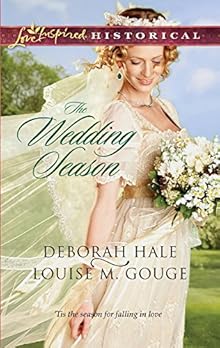
The Gentleman Takes a Bride in The Wedding Season
By Louise M. Gouge
Surely Elizabeth Moberly was born to be a nobleman's bride. She can't possibly be attracted to the untitled stranger who interrupts her cousin's wedding. Yet Elizabeth finds herself drawn to Philip Lindsey's tender heart and strong faith. And if Philip has his way, he'll convince Elizabeth the only title she needs is Mrs. Lindsey, beloved wife.
The Wedding Season reached #8 at amazon.com for Kindle romance anthologies! It has been in the top 50 for over a month.
Hampshire, England
June 1810
"I will not settle for an untitled husband." Lady Diana Moberly lifted her pretty little nose and sniffed. "I shall find a peer to marry, or I'll not marry at all."
Seated beside her cousin in St. Andrew's Church, Miss Elizabeth Moberly listened with rapt attention. After all, Di had just returned from her first London Season and knew everything about courtship and marriage. And in a few minutes, the wedding ceremony would begin, and Di's older sister would marry a handsome gentleman she met at Almack's only two months ago. An untitled gentleman. Di insisted she would do better.
Before Elizabeth could voice agreement, her other cousin, Miss Prudence Moberly, squeezed Elizabeth's hand and leaned around her to address Di.
"But what if the Lord wills for you to marry a good Christian gentleman without a title?"
Elizabeth swung her attention from Pru back to Di.
Di sniffed again. "La, such a question, Pru, but just what I would expect from you. Haven't I told you? The Almighty and I have an understanding about such things." She gazed down her nose at Pru.
Elizabeth released a quiet sigh. She and her two cousins had been born within months of each other eighteen years ago. The youngest daughters of three brothers, they looked almost like triplets, with blond hair, blue eyes, and ivory complexions. They had enjoyed a merry childhood together, yet these days their views on most everything were different. Di was always ready with an opinion on any topic and brooked no contradiction. Pru was the sweetest soul, but she never backed down from differences with their more influential cousin, especially on spiritual matters. Elizabeth vacillated between the two, but these days she tended to follow Di, who always seemed to have more fun.
Still, Elizabeth could not deny the peace she felt in this small stone church, which her family had attended for over two centuries. Nor could she guess how many relatives had been baptized here or how many lay buried in the ancient graveyard outside. This building was a place of beginnings and endings and all good things in between. Whenever she came here, it seemed to enfold her in sheltering arms, encouraging her always to seek God's will, whatever she might undertake in life.
Perhaps she could take the advice of both cousins. She would ask the Lord to send her a titled Christian husband.
But this was Sophia's day, and Elizabeth wished her great happiness with Mr. Whitson. Today, all things seemed to smile upon the bride. The sun shone brightly, and no one in their vast family had succumbed to illness to spoil the celebration. Flowers from Aunt Bennington's garden and bright green and white ribbons bedecked the altar and the pew ends, filling the air with the heady fragrance of roses.
The rustling of ladies' gowns and the shuffling of leather shoes on the wooden floor caught Elizabeth's attention, and she glanced over her shoulder. Across the aisle, several people had moved down so a tall young man of perhaps three and twenty years could slide into the pew.
Goodness, he was handsome, if a bit untidy. His wavy black hair appeared to have been arranged by the wind, and his black coat, while quite the mode, had a leaf caught under one lapel and perhaps a stray burr or two clinging to the sleeves. His lean, strong jaw was clenched, and his blue eyes gleamed with the look of a man set on accomplishing an important task. The gentleman must have ridden posthaste to arrive in such a condition. At the sight of him, Elizabeth's heart seemed to hiccough.
Or perhaps it was Pru's elbow in her ribs. "Tst," her proper cousin admonished.
"Humph." Di's ever-uplifted nose punctuated her disapproval of the latecomer.
Wishing to please her cousins, Elizabeth stared ahead. Her aunt, Lady Bennington, sat on the front row with her eldest son, the viscount. In the second row, Elizabeth's parents, Captain and Mrs. Moberly, sat with one of her brothers.
Soon the door beside the altar opened, and the vicar, Mr. Smythe-Wyndham entered, followed by Uncle Bennington, the bride Lady Sophia, and Mr. Whitson.
Elizabeth's resolve about titles wavered when she saw the groom. Tall, with broad shoulders and blond hair that curled around his well-shaped face, Mr. Whitson more than made up in form what he lacked in rank. Elizabeth could not deny cousin Lady Sophia had found a handsome man, even though Elizabeth preferred darker features.
As if summoned by her own thoughts, she turned toward the dark-featured stranger across the aisle. Seeing the stormy expression on his face, she drew in a quiet gasp. His strong, high cheeks were pinched with. . .anger? Dark stubble shaded his clenched, sun-bronzed jaw. His black eyebrows met in a frown over his straight nose, which pointed like an arrow toward the wedding couple, while his blue eyes shot flashing daggers.
Alarm spread through Elizabeth, but she had no time to think or act.
"Dearly beloved, we are gathered together here in the sight of God and in the face of this congregation to join together this man and this woman in holy matrimony." Mr. Smythe-Wyndham intoned the opening words of the solemn rite in his rich baritone. He read of God's purpose for marriage, then moved on to charge the couple to confess it now if there existed any impediment to their union.
Suspicion shot through Elizabeth, and her gaze again slid across the aisle to the dark-browed stranger. His face exhibited a controlled rage much like her father's when indignation filled him over some serious matter. The man edged toward the front of his seat, like a lion about to spring upon its prey.
"If any man do allege and declare any impediment," the minister read, "why they may not be coupled together in Matrimony, by God's Law, or the Laws of this Realm—"
The stranger shot to his feet, holding high a folded sheet of vellum. "Indeed, sir, I do declare an impediment."
Copyright 2011© Louise M. Gouge and Deborah Hale. All rights reserved. Do not reprint.
The Wedding Season is available at Walmart, amazon.com, barnesandnoble.com, and cbd.com.
Read more about Louise M. Gouge at http://blog.Louisemgouge.com
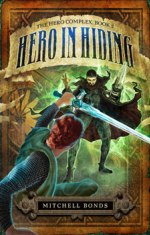
Hero in Hiding
By Mitchell Bonds
It's Monty Python meets Lord of the Rings. It's an unholy hybridization of Shrek and the Enchanted Forest Chronicles.
It's an Epic of Disastrous Proportions, and it's available on Amazon.
The sequel to the comedic fantasy satire "Hero, Second-Class," Hero in Hiding brings more laughs, more magic, more Monologues, Diabolical Plots, and in-combat narration than its predecessor. Join the young Hero Cyrus Solburg as he attempts to foil the plot of Voshtyr Demonkin and his attempt to rule the world with the P.L.O.T. Device!
---
"Serimal! Brother dearest! Come out and play!" Voshtyr spun the tube and flicked it out at arm's length. A marble column a few yards away exploded into dust. "I know you're here," he called. "You can hide until I reduce the castle to rubble, the rubble to dust, and the dust to nothing, but you'll just be wasting both our time!"
"Then waste this, Demonkin!" Jolan hurled one of his black lances at Voshtyr's head.
Voshtyr dropped to the ground, and the bolt passed overhead and blasted the single remaining loadbearing column for the only patch of roof left standing on the entire castle. It collapsed into rubble.
Voshtyr pushed himself up, dusting himself off. "Tsk, tsk, Hero," he said, looking at Jolan. "Destroying centuries-old architecture? That should come out of your pay!"
Jolan scowled. "Don't even start with the cute insults. And no, before you start, I don't care what your plans are, what the number of Heroes you've killed today is, or how pathetic you
think I am. You keep your kharestin Monologue to yourself."
The two sized each other up.
Voshtyr flexed his metal arm, snapping his concealed blade in and out of its chassis.
Jolan took a wide stance and allowed all four of his mechanical limbs to vent pressure. "Looks like you've had some work done too," he said. "Who designed yours?"
"Beelsephaz, Chief Demonic Artifactor," Voshtyr said. "Do you like it?"
"It's not bad . . . for cheap trash," Jolan said. "Mine were designed by Dair Kormari Angelis, master wizard and fine father."
"Cheap trash?" Voshtyr said. "Can yours do this?" His fingers folded and split into knives.
"Something that tawdry?" Jolan said. "Of course not. Mine can do this!" A set of glowing claws sprouted from the fingers of one hand, and his other hand transformed into a hammer. "Your little knife fingers are nothing!"
"Oh, really?" Voshtyr twisted his wrist sideways and tapped on the back of his hand. A full projection of the world appeared, hovering above the arm. Little red pinpricks of light floated inside it. "Can you track all your forces around the world with your arm?"
"No, but I can call my lawyer with my foot!" Jolan bent down and removed his left foot, which he held it up to his ear. "Hello, Cornwall and Associates?" he said. "Jolan Foster. No,
I don't need anything, just making a point. Goodbye." He put his foot back on. "Top that, nancy boy!"
"I can and will!" Voshtyr looked peeved. He tapped his shoulder. "Death ray!"
Jolan slapped his thigh. "Explosive launcher!"
Voshtyr pointed to his elbow. "Grappling hook!"
Jolan pulled a silver screen out of his left arm. "Tanning screen!"
"Blender!"
"Beverage warmer!"
"Sandwich press!"
"Nail gun!"
"Alarm clock!"
"Hang glider!"
"Spork!"
Jolan looked at Voshtyr askance. "You have a spork?"
"Well . . . yes?" Voshtyr said. "You never know when you might need a spork."
-
"So it looks like there's only one way to settle this," Green said, drawing his knives.
"All right," the Dwarf said, readying his halberd. "What'd that be, then?"
"A dance-off, of course!" Green threw down his knives points first in the dirt on opposite sides. "He who has the smoothest dance moves keeps the stone. Have at ye!"
The Green Falcon leapt into the air and did a backflip, then launched into a series of acrobatic loop-kicks and tumbles.
The Dwarves looked at each other as if stunned. And then, as a squad, they began to dance.
* * *
It is a little known fact that Dwarves, of all the Races in the world, are the best dancers. It stems from the fact that, over the course of the takeover by Axebeard and his ilk, most forms of
political and personal expression were either severely limited or completely banned. No speech was allowed against the government, nor fliers permitted to be printed, and any assembly for any purpose had to have a government monitor present to enforce these laws.
One thing Axebeard overlooked was the art of Dance.
Thorbeard Hammerheart, a master of Break Dancing, an ancient art combining the artistic and graceful movement of dance with the destructive power of berserker rage, began teaching local Dwarves his art as a manner of political protest. Over the next few years, handfuls of Dwarves would show up in front of the Polithaus where Axebeard held his meetings, and they would dance in protest. At one point, five hundred Dwarves danced in unison in the Grand Square of Underhall, and then they attacked the building.
Dancing gave the Dwarves their freedom from a tyrant, and thus they practice it to this day.
* * *
The Dwarves opened up with a set of unison squat kicks, followed by some traditional Polka crossed with some sort of violent stomp.
Green countered with an Electric Slide and the Wyrm.
The Dwarves launched into a spinning Break Dance, and pulverized boulders as they spun on their heads, slammed to the ground, and did flips off one another.
It went on for five minutes. Green's lack of teammates severely limited his available options, and at the end of that time, he ran out of impressive dance moves.
The Dwarves finished by running up the side of the valley and jumping onto one another's shoulders, then striking a dramatic pose all at once. They held the ta-da pose for a moment, all breathing heavily and glistening with sweat. And maybe some glitter.
The two tiny men Cyrus had seen earlier stepped out of the shrubbery and clapped. "Well done, well done!" said the little man in blue. "Very impressive, both sides. But the victory goes
to the Dwarves."
The Dwarves laughed and clapped Green on the back. "Ye may be a Hero, lad, but you just got served."
(C) 2011 Mitchell Bonds and Marcher Lord Press. Do not reproduce without permission.
Like it? Get it now! http://www.marcherlordpress.com/books/hero_in_hiding.html
or
http://www.amazon.com/Hero-Hiding-Mitchell-Bonds/dp/0982598742/ref=sr_1_1?ie=UTF8&qid=1311033957&sr=8-1
Friday, July 15, 2011
Treasuring Emma; Diagnosis Death

Treasuring Emma
by Kathleen Fuller
Book One in the Middlefield Family Series
Emma always put the needs of others ahead of her own.
Now her heart is torn between two men. But will either truly treasure her?
Adam was Emma's first love, but two years ago he left Middlefield, set on experiencing the freedom of living in the Yankee world. In his wake, he left Emma's shattered heart. Now Adam is back and Emma's heart is breaking for other reasons.
Kathleen Fuller is the best-selling author of over twenty novels. Her latest book, Treasuring Emma, releases in August, 2011.
http://www.amazon.com/gp/product/1595547754/ref=s9_simh_gw_p14_d3_i1?pf_rd_m=ATVPDKIKX0DER&pf_rd_s=center-2&pf_rd_r=1WP0RBM4FZHZQTPEHF81&pf_rd_t=101&pf_rd_p=470938631&pf_rd_i=507846
www.kathleenfuller.com
http://www.facebook.com/pages/Kathleen-Fuller/81836200502
Chapter 1
"Emma, I'm so sorry."
Emma Shetler lifted her gaze to meet Moriah Miller's eyes. Moriah had been a good friend to her over the past year, and Emma had never noticed until now how blue her eyes were. Blue like the summer sky, and at this moment, full of compassion.
Emma tried to swallow down the thorn of grief that blocked her throat. "I appreciate you and your familye coming by this afternoon."
"Your mammi was a very special fraa." Moriah laid a hand on Emma's shoulder. The warmth of the gentle touch seeped through the thin fabric of Emma's black dress.
The color of mourning. Of death.
Despite Moriah's comfort, that's what Emma felt inside. Dead.
She glanced around the living room. As expected, most members of the church district were here to pay their respects and show their support. Dark dresses and white kapps for the women, black pants and hats for the men—all of them in mourning clothes. They milled around the living room. Conversation and movement blurred into a meaningless cacophony of sound and motion.
Emma tapped her toe against the polished wood floor of the old farmhouse, her nerves strung tight as a barbed wire fence. She should have been in the kitchen, preparing and serving the traditional meal. But her sister Clara had taken over the cooking and banished her to the living room. This was supposed to make her feel better, stuck here, doing nothing?
She spied her grandmother Leona across the room. Clara must have chased her out of the kitchen, too. Several women between the ages of fifty and seventy created a circle of support around Grossmammi. Emma smiled to herself as she noticed the women's ample hips drooping over the seats of creaking, wooden folding chairs. They spoke in low tones, nodding and shaking their heads. The thin ribbons of their white prayer kapps swayed against the stiff white aprons covering their dresses. Emma had no doubt they were offering comforting passages of scripture and words of encouragement to their old friend.
During the seventy-five years God had granted her, Leona Shetler had loved her family deeply. But that love came with a cost. Three years ago, her son--Emma's father, James--had passed away. Now she had to deal with the death of a daughter-in-law she loved as her own.
Emma felt the grief stab at her. First her father, then her mother. It didn't seem fair. She wished she could muster even a small measure of the grace and peace her grandmother demonstrated. But instead she simply felt bereft, abandoned, and confused.
"Emma?"
She turned her attention back to Moriah. "Sorry. Did you say something?"
"I asked if you needed anything else."
"Oh, ya. I did hear you say that." The words clanged around in her head, empty noise. "Nee, I'm fine."
"All right." Moriah lifted an eyebrow. Her concern echoed that of her sisters Elisabeth and Ruth, along with everyone else who had passed by Emma's chair. The same question over and over: How are you holding up?
How did they think she was holding up? She had nursed her mother through a painful, deadly cancer. She buried her today.
Emma fought to contain her emotions: Anger. Resentment. Guilt. The community's heartfelt concern didn't deserve such rudeness. But nothing anyone said could penetrate the emotional wall that was growing around her, inch by excruciating inch.
Throughout the rest of the afternoon people paused to talk. Relived special moments they'd shared with Emma's mother and father. Assured Emma of God's will, His plan. Phrase after empty phrase about God's comfort and mercy.
She nodded and smiled and tried to look peaceful, while her foot went on tapping incessantly against the floor she'd scrubbed on her hands and knees. Why wouldn't they just leave her alone? That's what she wanted.
No, that wasn't the truth. There was one person she longed to have by her side. Only one. His words, spoken in a soft, deep voice that never failed to affect her, had the best chance of soothing her broken heart.
But he wouldn't come. He had walked out of her life two years ago, and she had no hope he would walk back into it now.
Book One in the Middlefield Family Series
Emma always put the needs of others ahead of her own.
Now her heart is torn between two men. But will either truly treasure her?
Adam was Emma's first love, but two years ago he left Middlefield, set on experiencing the freedom of living in the Yankee world. In his wake, he left Emma's shattered heart. Now Adam is back and Emma's heart is breaking for other reasons.
Kathleen Fuller is the best-selling author of over twenty novels. Her latest book, Treasuring Emma, releases in August, 2011.
http://www.amazon.com/gp/product/1595547754/ref=s9_simh_gw_p14_d3_i1?pf_rd_m=ATVPDKIKX0DER&pf_rd_s=center-2&pf_rd_r=1WP0RBM4FZHZQTPEHF81&pf_rd_t=101&pf_rd_p=470938631&pf_rd_i=507846
www.kathleenfuller.com
http://www.facebook.com/pages/Kathleen-Fuller/81836200502
Chapter 1
"Emma, I'm so sorry."
Emma Shetler lifted her gaze to meet Moriah Miller's eyes. Moriah had been a good friend to her over the past year, and Emma had never noticed until now how blue her eyes were. Blue like the summer sky, and at this moment, full of compassion.
Emma tried to swallow down the thorn of grief that blocked her throat. "I appreciate you and your familye coming by this afternoon."
"Your mammi was a very special fraa." Moriah laid a hand on Emma's shoulder. The warmth of the gentle touch seeped through the thin fabric of Emma's black dress.
The color of mourning. Of death.
Despite Moriah's comfort, that's what Emma felt inside. Dead.
She glanced around the living room. As expected, most members of the church district were here to pay their respects and show their support. Dark dresses and white kapps for the women, black pants and hats for the men—all of them in mourning clothes. They milled around the living room. Conversation and movement blurred into a meaningless cacophony of sound and motion.
Emma tapped her toe against the polished wood floor of the old farmhouse, her nerves strung tight as a barbed wire fence. She should have been in the kitchen, preparing and serving the traditional meal. But her sister Clara had taken over the cooking and banished her to the living room. This was supposed to make her feel better, stuck here, doing nothing?
She spied her grandmother Leona across the room. Clara must have chased her out of the kitchen, too. Several women between the ages of fifty and seventy created a circle of support around Grossmammi. Emma smiled to herself as she noticed the women's ample hips drooping over the seats of creaking, wooden folding chairs. They spoke in low tones, nodding and shaking their heads. The thin ribbons of their white prayer kapps swayed against the stiff white aprons covering their dresses. Emma had no doubt they were offering comforting passages of scripture and words of encouragement to their old friend.
During the seventy-five years God had granted her, Leona Shetler had loved her family deeply. But that love came with a cost. Three years ago, her son--Emma's father, James--had passed away. Now she had to deal with the death of a daughter-in-law she loved as her own.
Emma felt the grief stab at her. First her father, then her mother. It didn't seem fair. She wished she could muster even a small measure of the grace and peace her grandmother demonstrated. But instead she simply felt bereft, abandoned, and confused.
"Emma?"
She turned her attention back to Moriah. "Sorry. Did you say something?"
"I asked if you needed anything else."
"Oh, ya. I did hear you say that." The words clanged around in her head, empty noise. "Nee, I'm fine."
"All right." Moriah lifted an eyebrow. Her concern echoed that of her sisters Elisabeth and Ruth, along with everyone else who had passed by Emma's chair. The same question over and over: How are you holding up?
How did they think she was holding up? She had nursed her mother through a painful, deadly cancer. She buried her today.
Emma fought to contain her emotions: Anger. Resentment. Guilt. The community's heartfelt concern didn't deserve such rudeness. But nothing anyone said could penetrate the emotional wall that was growing around her, inch by excruciating inch.
Throughout the rest of the afternoon people paused to talk. Relived special moments they'd shared with Emma's mother and father. Assured Emma of God's will, His plan. Phrase after empty phrase about God's comfort and mercy.
She nodded and smiled and tried to look peaceful, while her foot went on tapping incessantly against the floor she'd scrubbed on her hands and knees. Why wouldn't they just leave her alone? That's what she wanted.
No, that wasn't the truth. There was one person she longed to have by her side. Only one. His words, spoken in a soft, deep voice that never failed to affect her, had the best chance of soothing her broken heart.
But he wouldn't come. He had walked out of her life two years ago, and she had no hope he would walk back into it now.
* * *
Diagnosis Death

Richard L. Mabry, MD
"…Another riveting medical drama, the third in his Prescription for Trouble series. Full of sudden twists and turns, the novel's fast pace makes it hard to put down."
(4 ½ stars) ~Romantic Times Book Reviews
The medical career of Dr. Elena Gardner hangs in the balance when she is accused of ending the life of two critically ill patients, one of them her husband. Midnight calls torments her, and she can't decide whether the people around her are friends or enemies. She only knows that one of them is stalking her.
When her comatose husband died in the ICU while on life support, the whispers about Dr. Elena Gardner began. They were stronger after another patient died in ICU. After she took up practice in a small town, the whispers turned to a shout: "mercy killing." What was the dark secret that kept Elena's lips sealed when she should be defending herself?
Prologue
She stood by his bedside and waited for him to die.
Outside the room, the machines and monitors of the ICU hummed and beeped, doctors and nurses went about their business, and the hospital smell—equal parts antiseptic and despair—hung heavy in the air.
With one decisive move she flipped the switch of the respirator and stilled the machine's rhythmic chuffing. In the silence that followed, she imagined she could hear his heartbeat fade away.
She kissed him and exhaled what passed for a prayer, her lips barely moving as she asked for peace and forgiveness—for him and for her.
She stood for a moment with her head bowed, contemplating the enormity of her action. Then she pocketed the empty syringe from the bedside table and tiptoed out of the room.
* * *
Elena entered her apartment that night to the accompaniment of pounding pulse and jangling nerves. As she crossed the threshold, she asked herself once more, "What's wrong with me?" She was an intelligent woman, a trained physician. There were no demons waiting in the darkness. True, once this apartment had been a home, and now it was only a place to sleep and eat and mourn. But that was no reason to let her grief take over her life.
Then again, it wasn't just the grief. There were the phone calls. If she'd heard heavy breathing or a torrent of obscenities, she'd know what was going on. She could handle that. Any single woman living in the city knew such things occurred. But these calls were more than that. And she thought she finally knew what they represented.
Elena dropped her backpack, slammed the door, and turned on the TV for company. The mail went onto the small table beside her armchair. It could wait. First, a shower and a cup of tea.
Clean, but in no way refreshed, Elena dropped into the easy chair and considered the mail. There was never anything good there anymore. The condolence cards and letters had dried up. She had no family to send her cheery notes. Only her creditors and the people wanting her to spend money she didn't have now accounted for the handful of mail she received.
The envelope was there between her MasterCard bill and an ad for a new textbook. The envelope was a cheap, self-sealing one, addressed by hand in block capitals using blue ballpoint. Two different stamps were affixed to provide the proper postage. The blurred postmark gave no indication of the city of origin.
Elena ran her finger under the flap and pulled out a single sheet of paper from a lined tablet.
The message was printed in the same block capitals. At the end, the writer had pressed down hard enough to penetrate the paper. Elena read the message twice, unable at first to understand and then unwilling to believe it.
I KNOW WHAT YOU DID AND YOU'LL PAY.
She dropped the paper onto the table and pressed both hands to her temples.
Do not reproduce without permission.
Diagnosis Death is available for purchase at fine bookstores, and at Amazon, Barnes & Noble, and Christian Book.com.
Richard L. Mabry, MD
"Medical Suspense With Heart"
http://rmabry.com
http://facebook.com/RichardMabry
Friday, July 01, 2011
The Muir House

The Muir House
By Mary DeMuth
Zondervan, July 2011
ISBN-13: 978-0310330332
Blurb for The Muir House:
'You'll find home one day. Sure as sweet tea on a hot afternoon.' Words from Willa Muir's sketchy childhood haunt her dreams and color her days with longing, regret, and fear. What do the words mean? Willa is far from sure. When Hale Landon places a ring on her finger, Willa panics, feeling she can't possibly say yes when so much in her past is a mystery. Bent on sorting out her history, Willa returns to Rockwall, Texas, to the Muir House Bed and Breakfast, a former funeral home. But the old place holds her empty memory close to itself. Willa's mother utters unintelligible clues from her deathbed, and the caretaker of the house keeps coveted answers carefully protected. Throw in an old flame, and Willa careens farther away from ever knowing the truth. Set in a growing suburb of Texas, The Muir House explores trauma, healing, love new and old, and the life-changing choices people make to keep their reputations intact.
Endorsements:
"Willa Muir is one of the strongest twenty-something characters in modern fiction. Her quest to reconnect with her past before embracing her future will resonate with anyone who has ever left loose ends untied. The Muir House is a fascinating coming-of-age tale with twists and turns that constant leave the reader wanting more. It is Mary DeMuth's finest work yet and it shouldn't be missed. Whether young, or young at heart, you will find yourself enraptured by Willa's determination to finally find home. In fact, this book just might lead you home too." Shannon Primicerio, author of The Divine Dance
"Mary DeMuth has once again captured my soul with a story that resonated long after I closed the back cover. DeMuth is a master at immersing readers in another world—one of hopes and fears and triumphs. She's done it again with The Muir House. Her finest novel yet." James L. Rubart, bestselling author of Rooms
one
Seattle, March 2009
In that hesitation between sleep and waking, that delicious longing for dawn to overwhelm darkness, Willa Muir twisted herself into the sheets, half aware of their binding, while the unknown man's face said those words again.
You'll find home one day.
She opened her eyelids, forced wakefulness, maligning sleep's lure. Her two legs thrust themselves over the side of the storm-tossed bed. Toes touched hardwoods, chilling her alert, finally. She pulled the journal to herself in the dusky gray of the room, opened its worn pages, then touched pen to paper. She copied the words as she heard them. The same sentences she'd written year after year in hopes of deciphering its message, understanding it fully. But they boasted the same syntax, the same prophecy, the same shaded sentences spoken by a dream man with a broken, warbled voice. A faceless man of the South, words erupting like sparklers from the black hole of Willa's memory.
Why couldn't she remember the man? Understand his cryptic message?
Something stirred then. A flash of recognition. Willa closed the journal, placed her pen diagonally on top, then curled herself into a sleep ball, covers over her head like a percale cocoon. She forced her eyes shut, willing her mind to remember the glinting.
There! Like an Instamatic from her childhood, the flashbulb illuminated a gold ring. The man didn't cherish it on his finger. He held it like a monocle, as if he could see through it clear to eternity. Through that ring, a circular snapshot of the man clarified. Though the rest of his face faded into blue mist, his eye, wrinkle-creased and wise, focused like an eye doctor's chart under the perfect lens. A crocodile-green iris circled a large black pupil, its whites streaked pink with lacy vessels. It winked at Willa, or maybe it merely blinked. Hard to decipher, looking at one eye. The eye held sadness and grace, laughter and grief — ​and an otherworldly hint of promise. Willa memorized that eye behind the gold ring.
But like every other snatch of Willa's memory from that vacant memory of a four-year-old, the eye vaporized.
So familiar.
Yet so unfamiliar.
Nearly the green of Blake's eyes so long ago, those bewitching, enticing eyes she'd made herself turn away from, breaking her heart. Shattering his.
She returned to her journal, sketching the ring, the hazy face. The muddy-green eye she highlighted with an olive pencil. Light played at the window shade. She tugged it down so it would fling ceilingward, which it did in flapping obedience. She opened the sash, ushering in Seattle's evergreen perfume. The crisp air stung her Southern arms with goose bumps as she inhaled its scent. Fifty-five degrees in the morning felt like ice to Willa, even now. But facts were facts: You just couldn't compare the air's pristine cleanness to the South's sometimes thicker-than-mud humidity. And if she could help it, she'd never breathe Texas again.
Mother made it quite clear. Not even Southern hospitality could woo Willa back, not with Mother's hateful words swirling through the heat.
Willa fingered Mrs. Skye's letter atop her pile of books. "Come home," the caretaker wrote, in plainer-than-plain English — ​dark blue letters on crisp white stationery. "I need your help remodeling the Muir House. Need your expertise. Besides, your mother needs you. She's fading as fast as the house's paint peels. It's time."
Willa shook her head in response. "No," she said to her room, her heart, her will. "I can't. Won't."
But something deep inside told her it was time to find home.
Willa folded Mrs. Skye's letter in half. Instead of quartering it and returning it to its envelope, she tore it into confetti. When she left the room, the confetti stuck to her bare feet.
Do not reproduce without permission.
Mary DeMuth
http://www.marydemuth.com
http://www.twitter.com/MaryDeMuth
http://www.facebook.com/AuthorMaryDeMuth
By Mary DeMuth
Zondervan, July 2011
ISBN-13: 978-0310330332
Blurb for The Muir House:
'You'll find home one day. Sure as sweet tea on a hot afternoon.' Words from Willa Muir's sketchy childhood haunt her dreams and color her days with longing, regret, and fear. What do the words mean? Willa is far from sure. When Hale Landon places a ring on her finger, Willa panics, feeling she can't possibly say yes when so much in her past is a mystery. Bent on sorting out her history, Willa returns to Rockwall, Texas, to the Muir House Bed and Breakfast, a former funeral home. But the old place holds her empty memory close to itself. Willa's mother utters unintelligible clues from her deathbed, and the caretaker of the house keeps coveted answers carefully protected. Throw in an old flame, and Willa careens farther away from ever knowing the truth. Set in a growing suburb of Texas, The Muir House explores trauma, healing, love new and old, and the life-changing choices people make to keep their reputations intact.
Endorsements:
"Willa Muir is one of the strongest twenty-something characters in modern fiction. Her quest to reconnect with her past before embracing her future will resonate with anyone who has ever left loose ends untied. The Muir House is a fascinating coming-of-age tale with twists and turns that constant leave the reader wanting more. It is Mary DeMuth's finest work yet and it shouldn't be missed. Whether young, or young at heart, you will find yourself enraptured by Willa's determination to finally find home. In fact, this book just might lead you home too." Shannon Primicerio, author of The Divine Dance
"Mary DeMuth has once again captured my soul with a story that resonated long after I closed the back cover. DeMuth is a master at immersing readers in another world—one of hopes and fears and triumphs. She's done it again with The Muir House. Her finest novel yet." James L. Rubart, bestselling author of Rooms
one
Seattle, March 2009
In that hesitation between sleep and waking, that delicious longing for dawn to overwhelm darkness, Willa Muir twisted herself into the sheets, half aware of their binding, while the unknown man's face said those words again.
You'll find home one day.
She opened her eyelids, forced wakefulness, maligning sleep's lure. Her two legs thrust themselves over the side of the storm-tossed bed. Toes touched hardwoods, chilling her alert, finally. She pulled the journal to herself in the dusky gray of the room, opened its worn pages, then touched pen to paper. She copied the words as she heard them. The same sentences she'd written year after year in hopes of deciphering its message, understanding it fully. But they boasted the same syntax, the same prophecy, the same shaded sentences spoken by a dream man with a broken, warbled voice. A faceless man of the South, words erupting like sparklers from the black hole of Willa's memory.
Why couldn't she remember the man? Understand his cryptic message?
Something stirred then. A flash of recognition. Willa closed the journal, placed her pen diagonally on top, then curled herself into a sleep ball, covers over her head like a percale cocoon. She forced her eyes shut, willing her mind to remember the glinting.
There! Like an Instamatic from her childhood, the flashbulb illuminated a gold ring. The man didn't cherish it on his finger. He held it like a monocle, as if he could see through it clear to eternity. Through that ring, a circular snapshot of the man clarified. Though the rest of his face faded into blue mist, his eye, wrinkle-creased and wise, focused like an eye doctor's chart under the perfect lens. A crocodile-green iris circled a large black pupil, its whites streaked pink with lacy vessels. It winked at Willa, or maybe it merely blinked. Hard to decipher, looking at one eye. The eye held sadness and grace, laughter and grief — ​and an otherworldly hint of promise. Willa memorized that eye behind the gold ring.
But like every other snatch of Willa's memory from that vacant memory of a four-year-old, the eye vaporized.
So familiar.
Yet so unfamiliar.
Nearly the green of Blake's eyes so long ago, those bewitching, enticing eyes she'd made herself turn away from, breaking her heart. Shattering his.
She returned to her journal, sketching the ring, the hazy face. The muddy-green eye she highlighted with an olive pencil. Light played at the window shade. She tugged it down so it would fling ceilingward, which it did in flapping obedience. She opened the sash, ushering in Seattle's evergreen perfume. The crisp air stung her Southern arms with goose bumps as she inhaled its scent. Fifty-five degrees in the morning felt like ice to Willa, even now. But facts were facts: You just couldn't compare the air's pristine cleanness to the South's sometimes thicker-than-mud humidity. And if she could help it, she'd never breathe Texas again.
Mother made it quite clear. Not even Southern hospitality could woo Willa back, not with Mother's hateful words swirling through the heat.
Willa fingered Mrs. Skye's letter atop her pile of books. "Come home," the caretaker wrote, in plainer-than-plain English — ​dark blue letters on crisp white stationery. "I need your help remodeling the Muir House. Need your expertise. Besides, your mother needs you. She's fading as fast as the house's paint peels. It's time."
Willa shook her head in response. "No," she said to her room, her heart, her will. "I can't. Won't."
But something deep inside told her it was time to find home.
Willa folded Mrs. Skye's letter in half. Instead of quartering it and returning it to its envelope, she tore it into confetti. When she left the room, the confetti stuck to her bare feet.
Do not reproduce without permission.
Mary DeMuth
http://www.marydemuth.com
http://www.twitter.com/MaryDeMuth
http://www.facebook.com/AuthorMaryDeMuth
Subscribe to:
Posts (Atom)
